









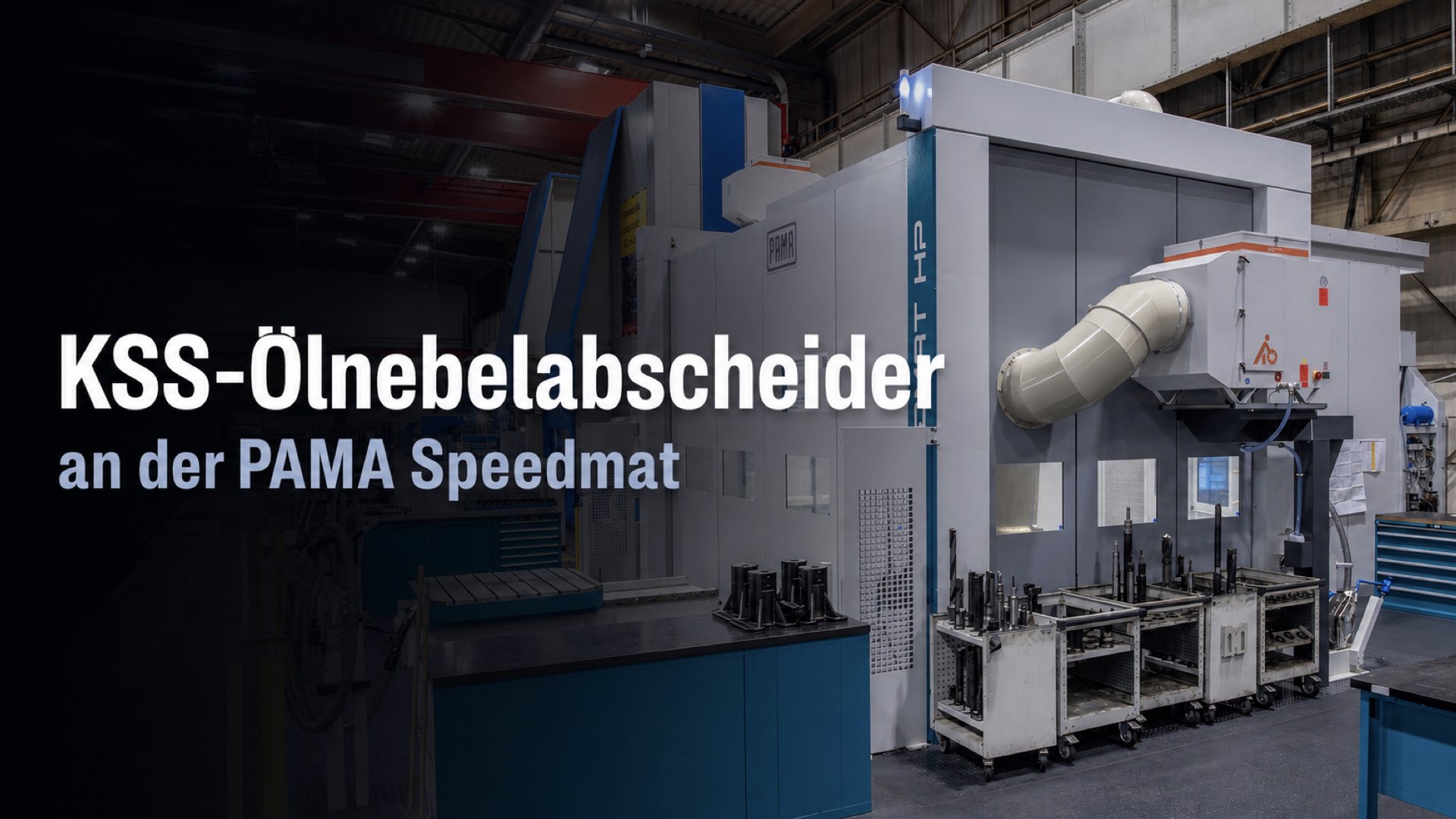
For large machine tools, a coolant mist collector is not simply an accessory. It is a key component for clean air, safe work areas, and a stable manufacturing process. This is demonstrated by a recent project at Everllence in Oberhausen: For a new PAMA Speedmat, the air purification system was specifically planned, calculated, and installed—tailored to the machine, the airflow, and the cooling lubricant used.
Wherever cooling lubricants are used, fine droplets are released into the air. Depending on the machining process, temperature, pressure, and medium, cooling lubricant mist, emulsion mist, or oil mist can form. These aerosols must not be allowed to escape uncontrolled from the machine into the production hall. This is precisely why a modern oil mist collector must not only extract air but also be properly integrated into the machine design.
Our article on air purifiers for machine tools.
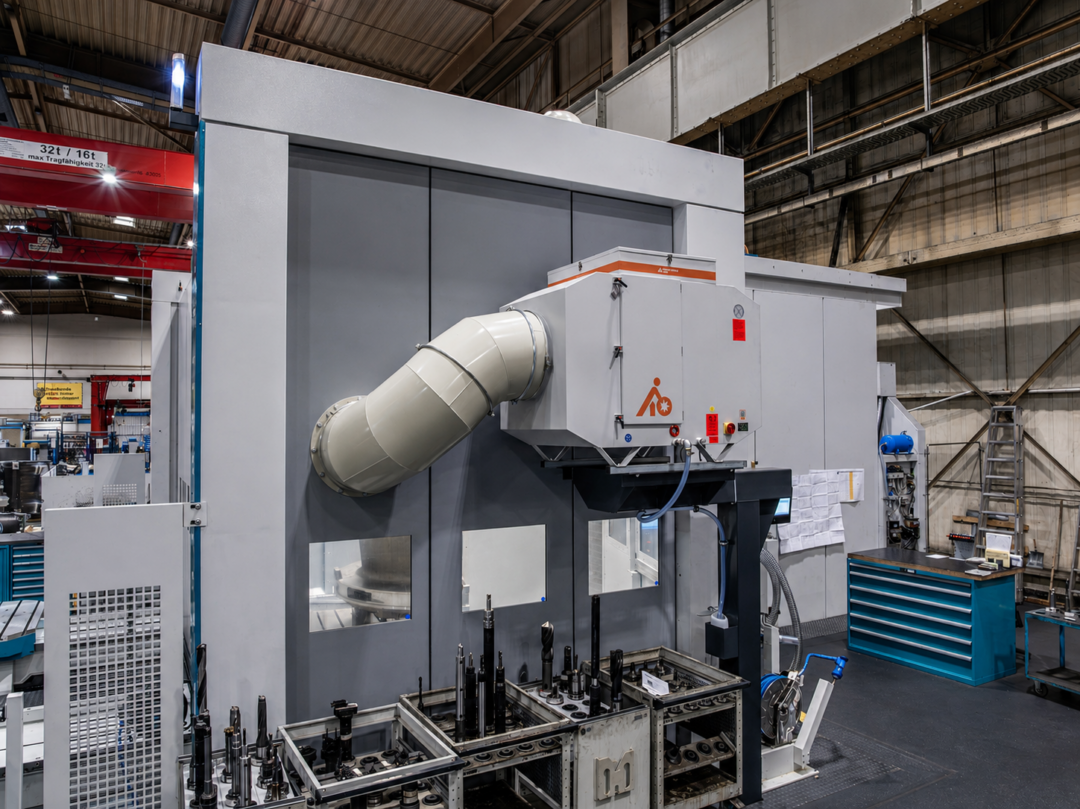
KSS Oil Mist Separator on the PAMA Speedmat
This project involves a new PAMA Speedmat at the Everllence production facility in Oberhausen. The pictures alone illustrate the scale of the system: large machine enclosures, multiple connection points, piping, exhaust hoods, and an industrial environment where reliability and clean processes are essential.
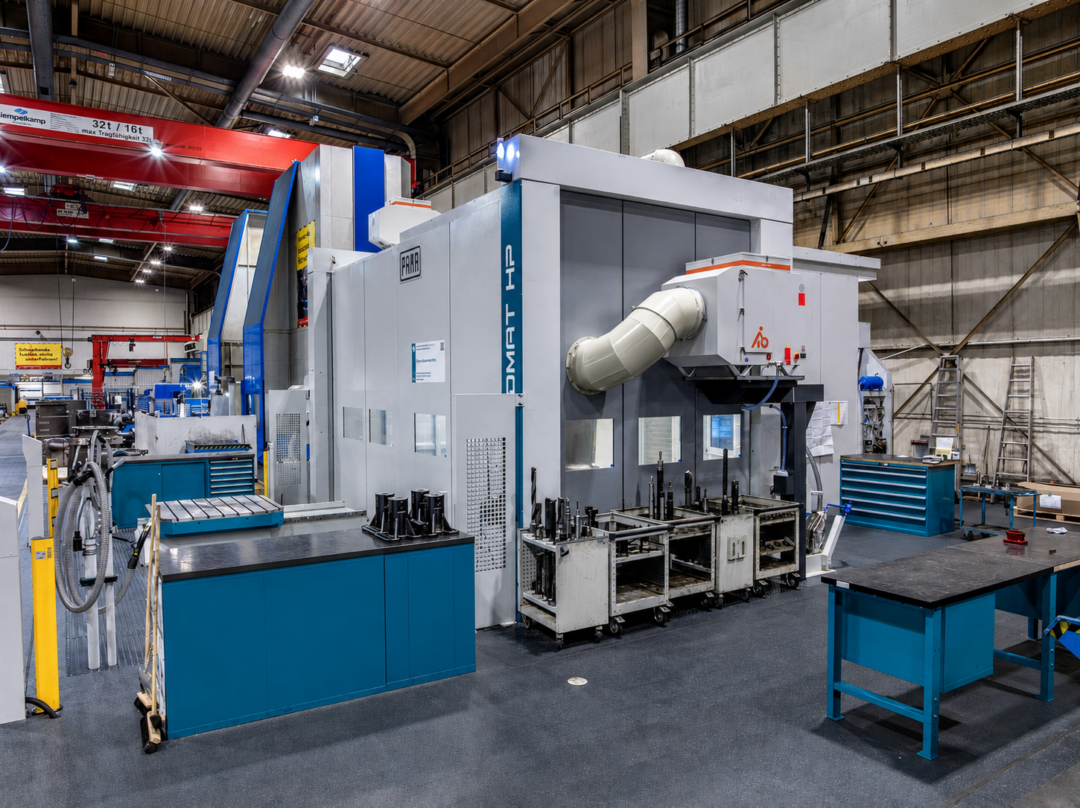
An emulsion is used as a cooling lubricant. This is widely used in machining, but places clear demands on the separation process. Emulsion mist consists of very fine droplets. These must be captured as close as possible to the point of generation and then reliably separated.
A total of three C-XSC units were used for this application: one C-5 XSC and two C-7 XSC units. Airtec determined the air flow rate to be 15,000 m³/h. This is not a small local exhaust system, but rather a well-designed air purification solution for a large machine tool.
All technical specifications, CAD, and BIM downloads are available in our online product configurator: Go to the REVEN Configurator
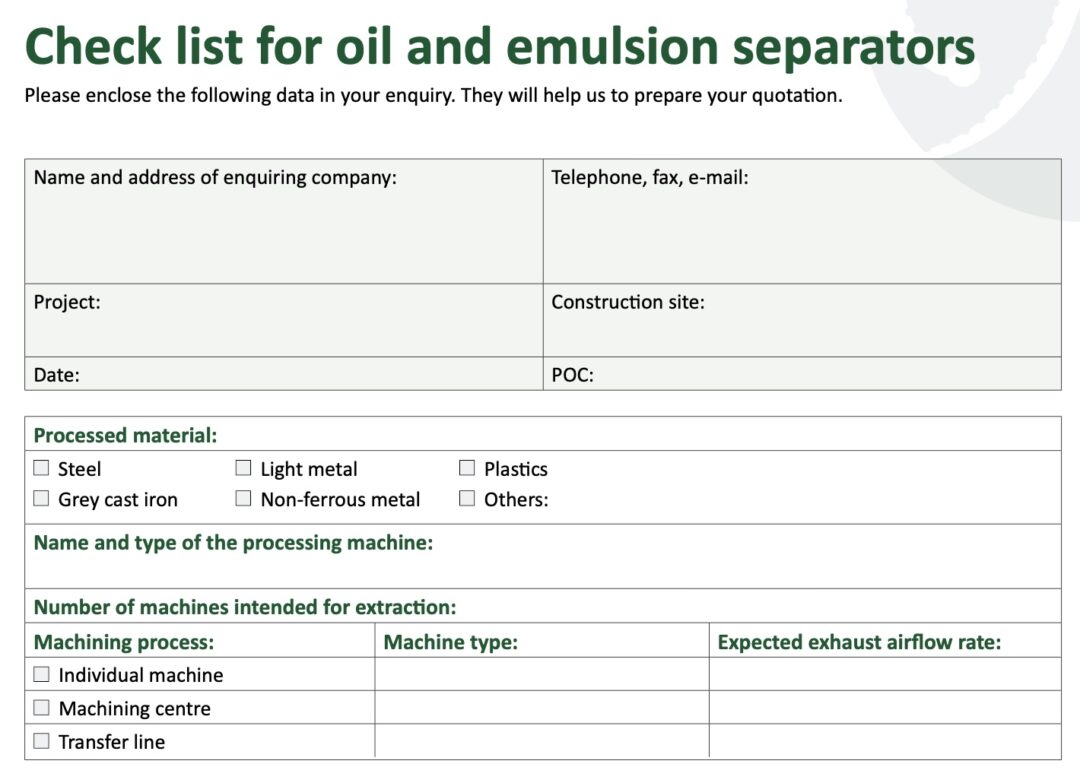
Our “Oil and Emulsion Separator Checklist” serves as the basis for determining the correct exhaust air volume:
Airflow: Why a Coolant-Lubricant Oil Mist Separator Must Be Installed Correctly
With large machining centers, it is not enough to simply install a mist collector in any available space. The machine room is large. Doors, panels, maintenance areas, spindle compartments, and openings all affect how coolant mist moves inside the machine.
A coolant mist separator can only work effectively if the air is captured at the right locations. The air volume alone is therefore not the decisive factor. It is also important that this air volume be effectively captured and separated within the machine.
This was precisely what made this project unique. The installation of the three units was carried out by airtec . It wasn’t simply a matter of placing the separators “on top.” Instead, the airflow paths within the machine were taken into account, and the optimal unit connection was determined.
Deliberately chose not to go with a standard solution
The decision leading up to the event is also exciting. Everllence did not want to rely on the machine manufacturer’s standard oil mist filters for the new PAMA Speedmat. Instead, it was specified that the proven oil mist separators from the Hoffmann Group be used.
This shows just how important clean air is in modern manufacturing facilities. Exhaust systems are no longer viewed merely as accessories; they are an integral part of machine design. Operators are paying closer attention to the technology used, how the air is routed, and whether the solution is well-suited to the actual process.
We’ve also had positive experiences with this setup in a previous project. You can find more information in the earlier REVEN case study on MAN Energy Solutions and REVEN air purifiers.
15,000 m³/h: Airflow is important, and so is the installation location
An air flow rate of 15,000 m³/h sounds impressive. However, this figure alone does not tell the whole story about the quality of air purification. The key factor is whether the air is being extracted at the right locations.
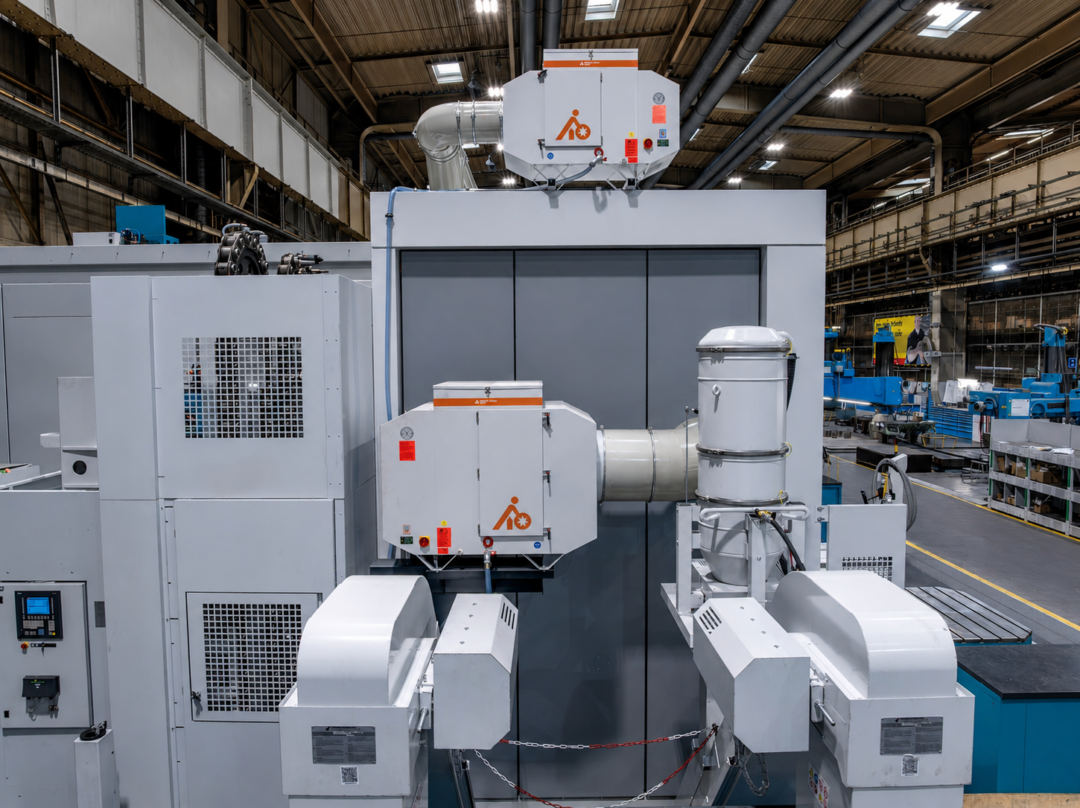
If an extraction system is positioned incorrectly, it may still be able to move air but will not be able to capture it effectively. This results in unfavorable airflow patterns, stagnant zones, or areas where cutting fluid mist lingers longer in the machine room. When the machine is opened, contaminated air can then escape into the shop.
A properly designed coolant oil mist separator helps prevent exactly that. It facilitates targeted airflow, effectively captures coolant aerosols, and helps keep the machine environment cleaner.
Teamwork Between Operations, Mechanical Engineering, and Air Purification
Another key to success was the collaboration among the partners involved. Everllence provided the clear, practical requirements. The Hoffmann Group Essen was involved as the partner for the oil mist separators. airtec handled the technical evaluation, assessment, and on-site installation optimization. REVEN uses the C-XSC units to separate the cutting fluid aerosols.
Projects like these demonstrate how modern air purification in mechanical engineering should work: not as an afterthought, not as a one-size-fits-all solution, and not based on the principle that “one device fits all.” Instead, a solution is needed that is tailored to the machine, the process, the air volume, the cooling lubricant, and the installation conditions.
Oil mist separator, cutting fluid separator, or cooling lubricant separator?
In practice, the term “oil mist collectors” is often used. However, in many applications, it is not just a matter of pure oil mist. Depending on the cooling lubricant used, metalworking can also produce emulsion mist or mixtures of fine droplets and particles.
That is why the term “coolant separator” is often more precise. In the current project, an emulsion is used as the coolant. The focus is therefore on the separation of coolant aerosols.
For operators, what matters in the end is not just that a separator is installed. What really counts is whether the entire system functions reliably over the long term. A good solution can improve indoor air quality, reduce pollution in the surrounding area, and have a positive impact on maintenance requirements.
What Operators Can Learn from This Project
This project highlights three key points.
First, the selection of an oil mist collector should not be left until the end of a machine project. If you want clean air, you should consider air purification early on.
Second, a high airflow rate alone is not enough. An airflow rate of 15,000 m³/h is only effective if that air is captured and filtered at the right locations.
Third, effective coolant separation is achieved through collaboration. The operator, machine supplier, ventilation specialist, and separation technology provider must work together to assess the specific application.
That is precisely what sets a standard solution apart from a tailored system solution.
Conclusion: A coolant oil mist separator is part of the manufacturing concept
The photos of the PAMA Speedmat at Everllence show a modern manufacturing environment with large machines, well-designed extraction technology, and professional integration. But the real story behind it is even more interesting: Everllence deliberately specified the air purification requirements, and airtec determined the air volume to be extracted and optimized the installation of the separators in the right locations.
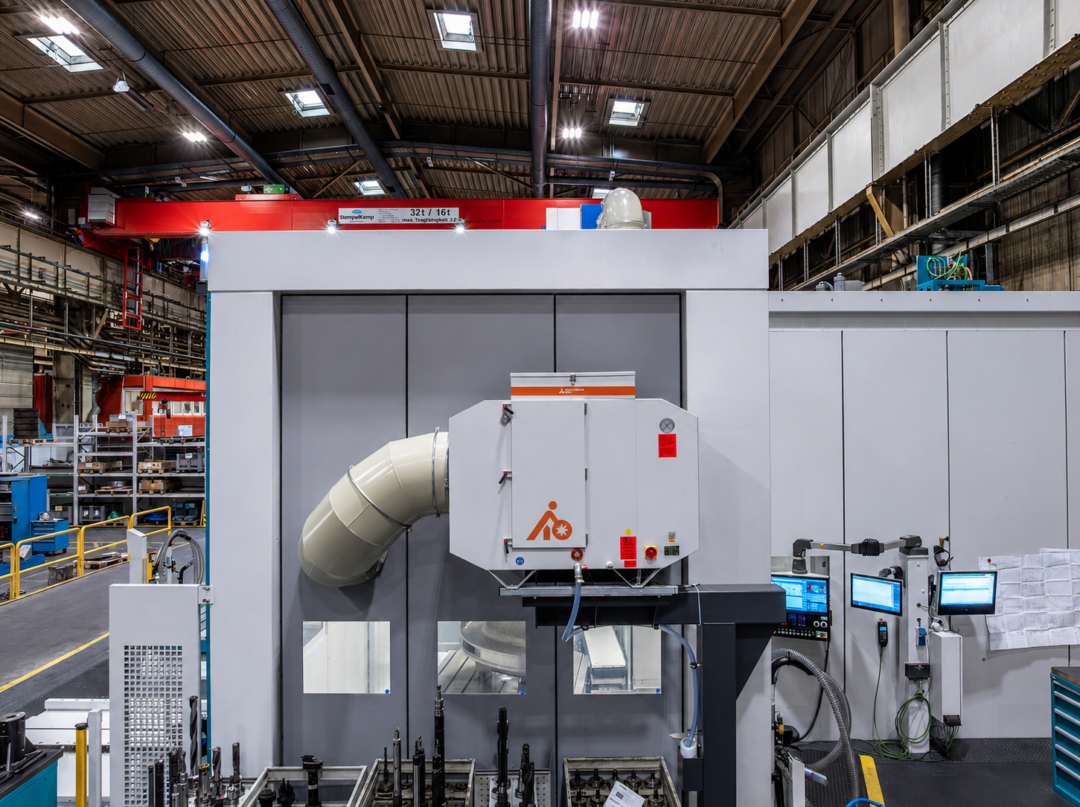
The C-XSC units used are responsible for capturing the coolant aerosols. The project thus clearly demonstrates the direction in which air purification in mechanical engineering is heading: away from retrofit accessories and toward a planned system solution.
After all, a good coolant mist collector isn’t just a box mounted on the machine. It’s part of a clean, safe, and well-thought-out manufacturing concept.