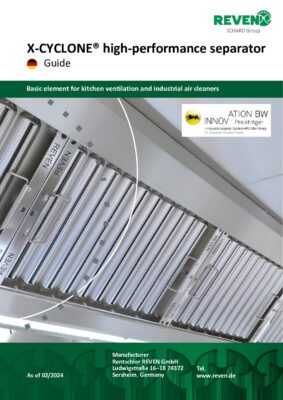








From simple baffle plates to flow-optimized separators. Many people talk about separators in ventilation technology. But how much development is really behind it?
In many projects, an aerosol separator still looks like a simple component. A bit of sheet metal, a few deflections, done. The main thing is that there is something in the hood. The main thing is that the issue seems to be resolved.
But this is where the problem begins.
Because a simple baffle plate is by no means a good aerosol separator. Anyone who takes air pollution control seriously has to deal with much more: fire load, standards, flow, particle paths, surfaces, measurement technology and real separation efficiency.
This is exactly what we talked about in our second REVEN / cci Webinar 2026.
Why simple filters and primitive baffle plates are not enough
Decades ago, simple knitted filters and simple baffle plates were the state of the art in commercial kitchen ventilation. The problem with this is that filters store grease and oil. This not only increases the pressure loss. It also increases the fire load.
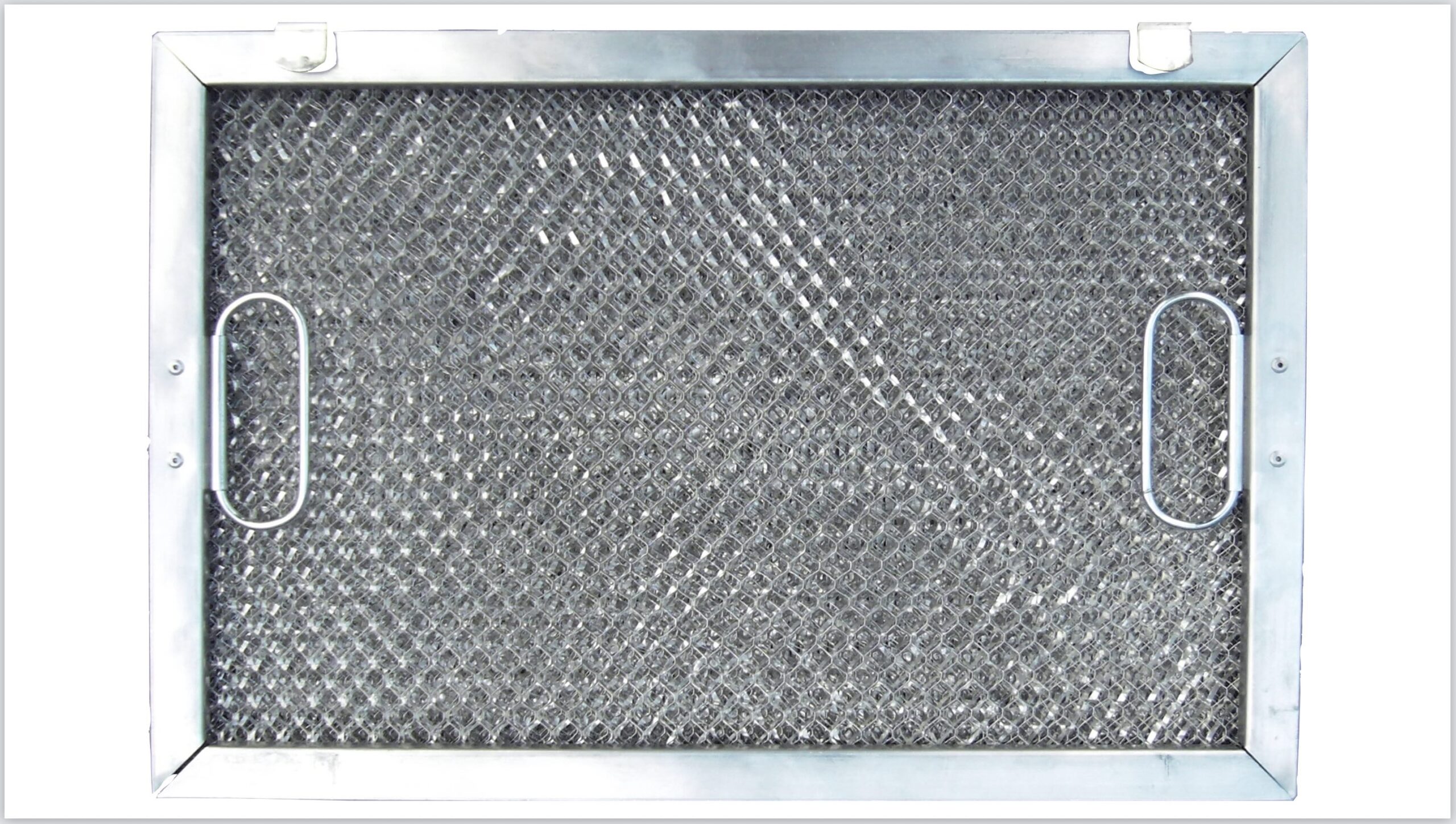
Such systems were precisely one of the reasons why the industry had to develop further.
The fire catastrophe at the MGM Grand Hotel in Las Vegas in 1980 was a turning point, after which there was a consistent response in North America. Filters largely disappeared from commercial kitchen ventilation systems and the focus shifted to separators.
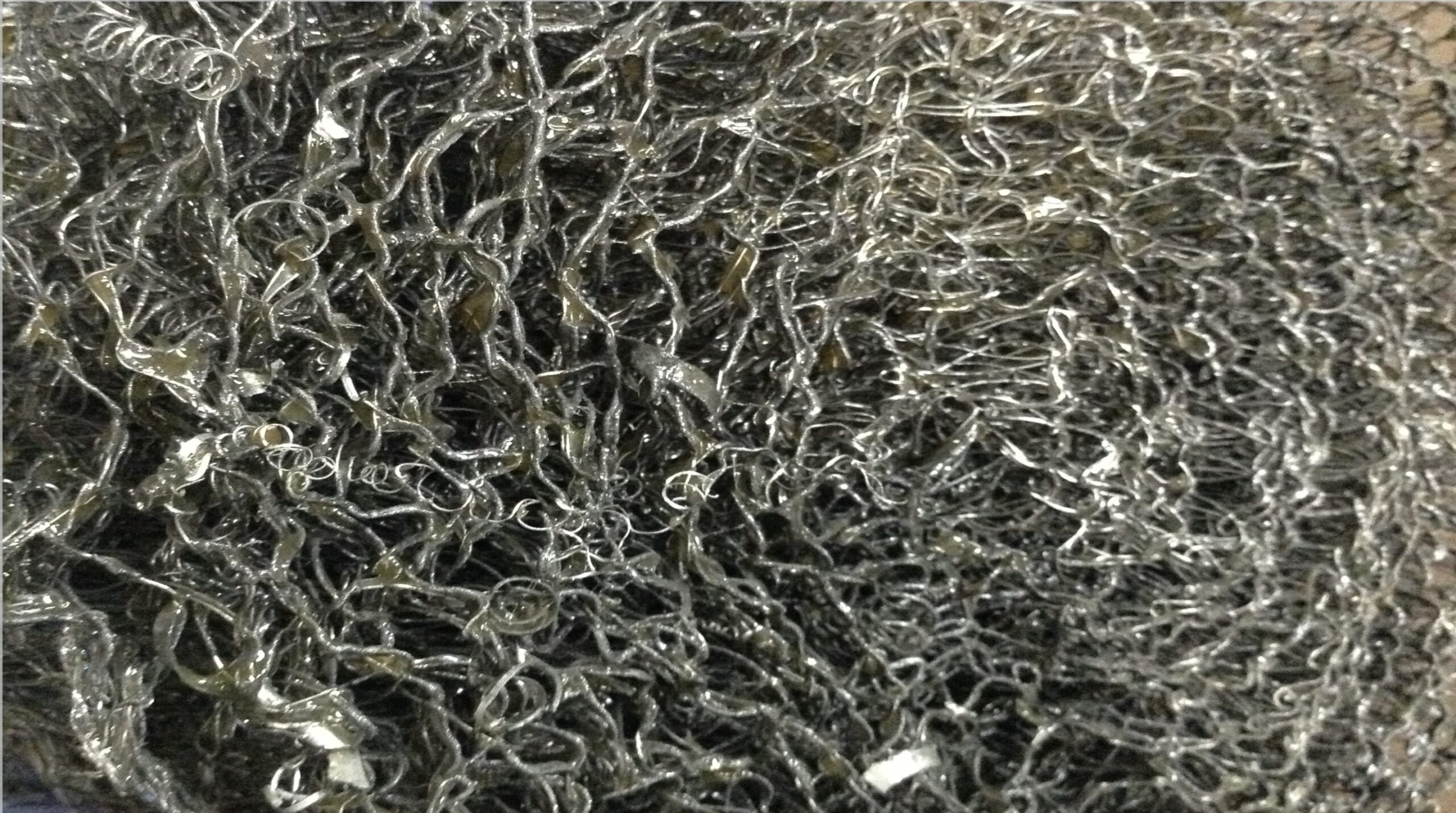
In Germany and Europe, this development took much longer.
Standards help – but they don’t solve every problem
Today it is clear that a ventilation system must not only capture and extract air. It must also be able to separate aerosols from the exhaust air flow.
This is exactly what European standards have been demanding for years.
Nevertheless, the reality is often different.
Old knitted filters can still be found in existing systems. Combination separators are still being installed, which appear modern at first glance, but in practice have similar problems to classic filters: they store grease, they increase the pressure loss and they are difficult to clean.
The result is often sobering. The amount of air decreases, the collection is worse and the kitchen becomes smoky.
What really happens in practice
In the webinar, Holger Reul described very clearly what can be seen time and again in day-to-day business:
Kitchen hoods with combination separators seem to work well at first. But as soon as grease and oil build up in the system, the resistance increases. The air performance drops. Collection deteriorates. Maintenance and complete cleaning become impossible. And this is precisely when it becomes apparent that a seemingly good system is actually reaching its limits.
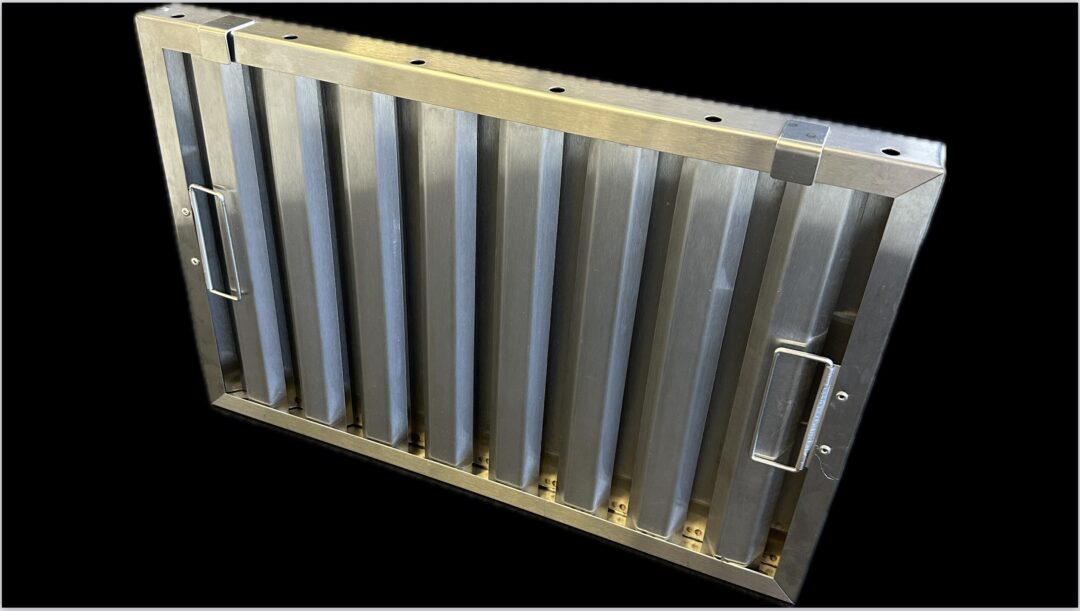
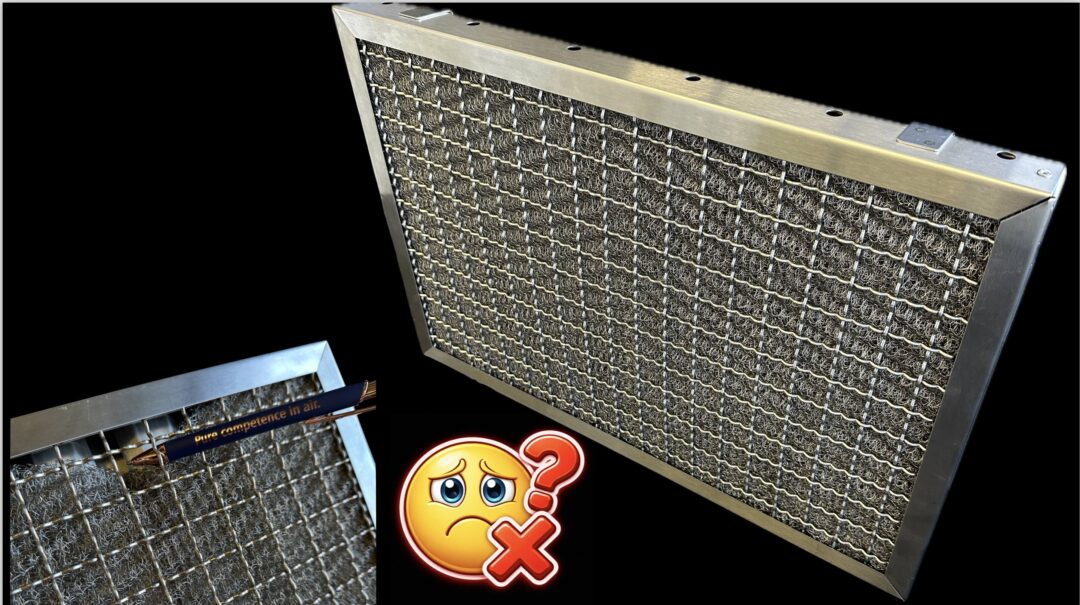
It is particularly critical where there is a lot of grilling, frying or deep-frying. In other words, exactly where high levels of stress occur.
The uncomfortable truth is therefore:
Not everything that looks like a separator actually separates aerosols efficiently from the exhaust air flow.
What modern aerosol separators need to do better
A modern aerosol separator must do more than just divert air. It must:
- Reliably separate aerosols from the exhaust air flow
- Safely discharge separated liquid
- keep the pressure loss low
- Do not generate any additional fire load
- and also function permanently in real operation
So it is not enough to simply place two sheets against each other.
It needs development.
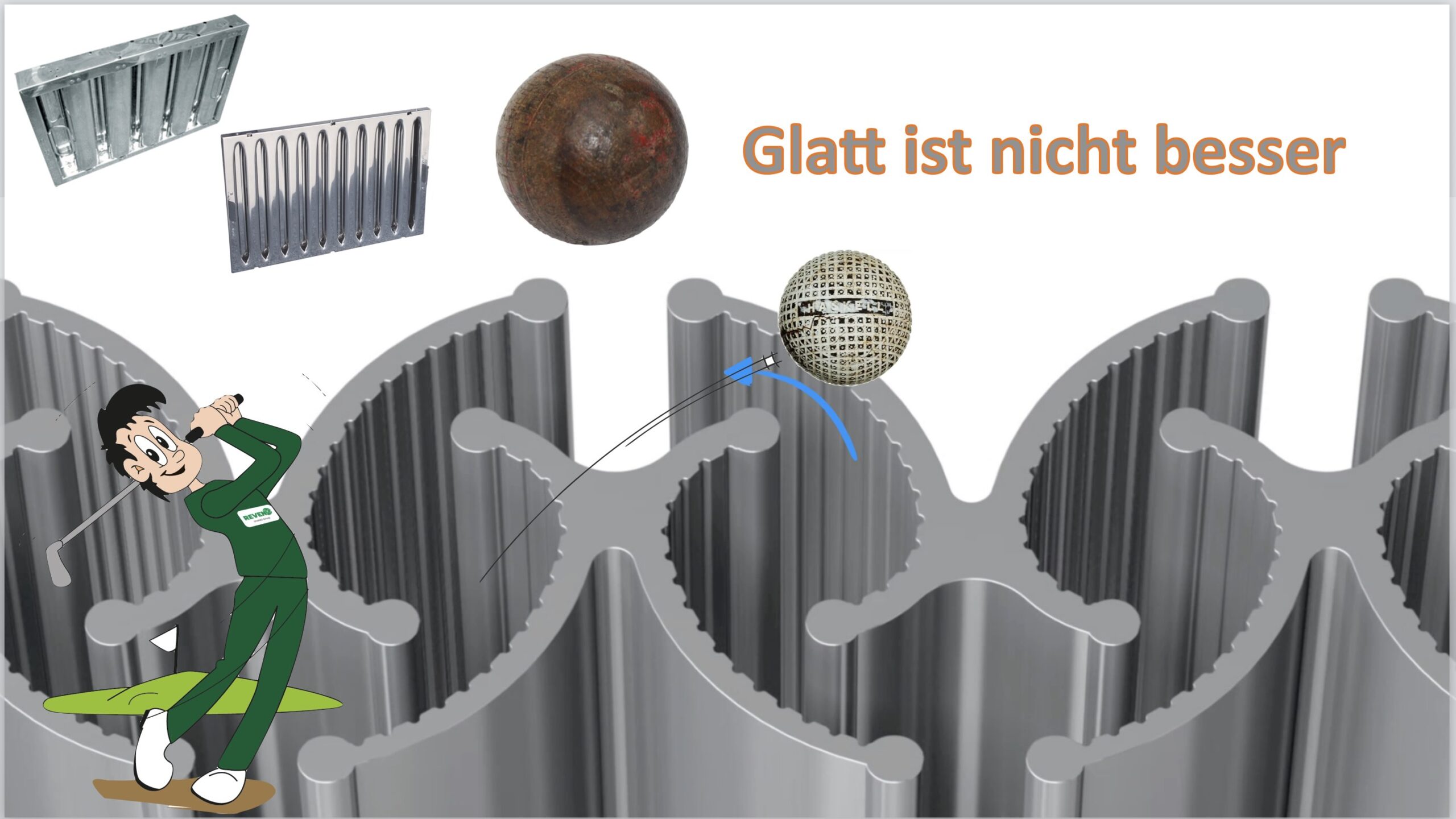
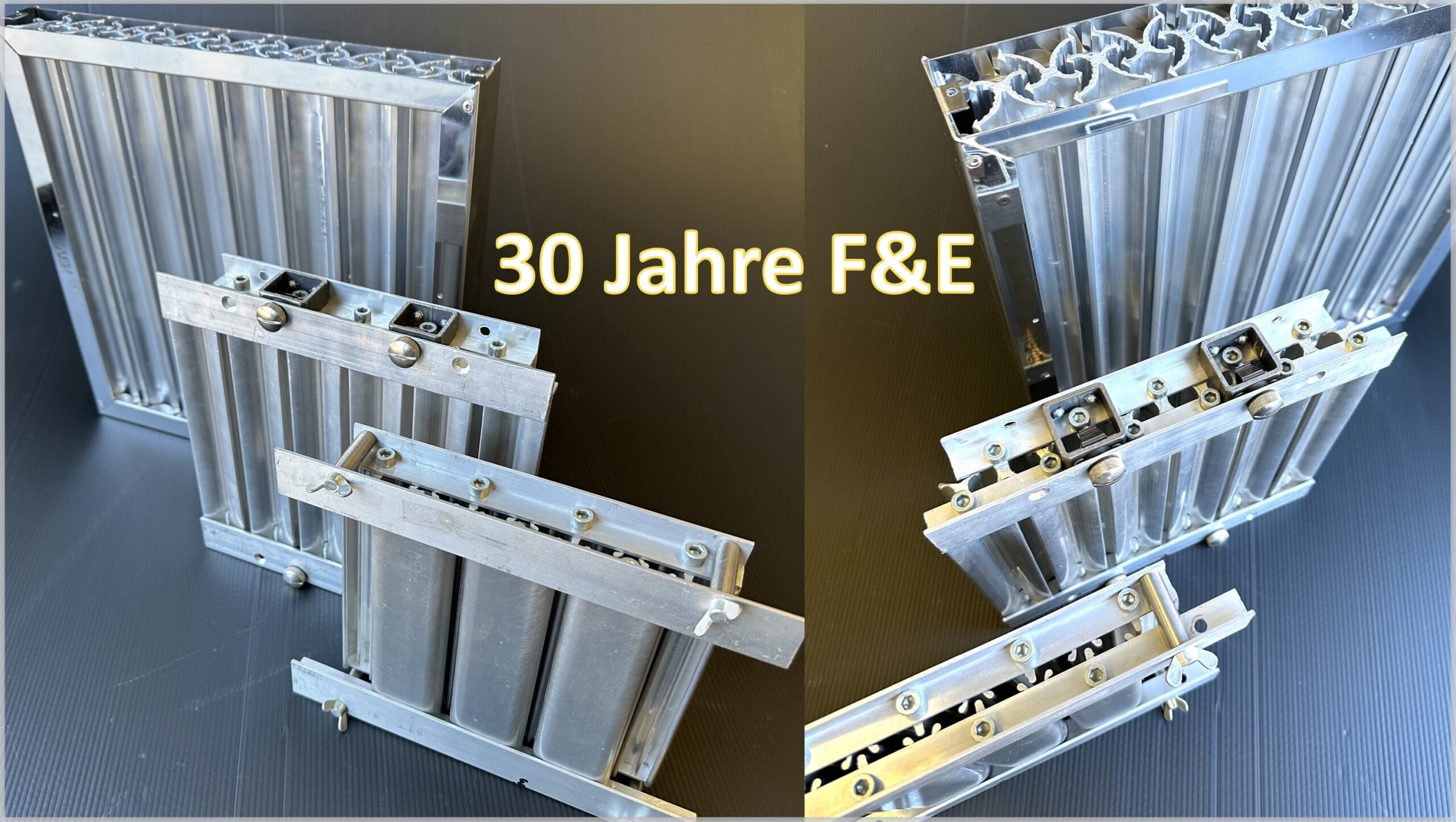
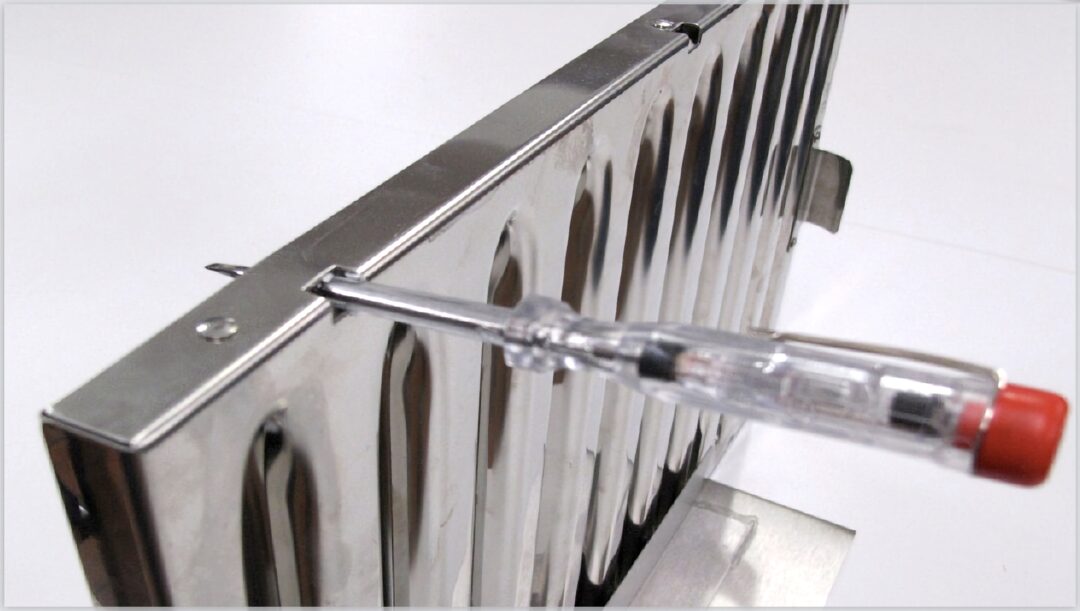
Why rough surfaces often work better than smooth ones
One particularly interesting point from the webinar was the question of why rough surfaces in separators often work better than highly polished ones.
The answer lies in physics.
Small aerosols follow the air flow almost completely. When they reach the surface of a separator, they not only have to be separated, but also held there. This is precisely where structured, rough surfaces help, because the separated liquid adheres better and can run off better.
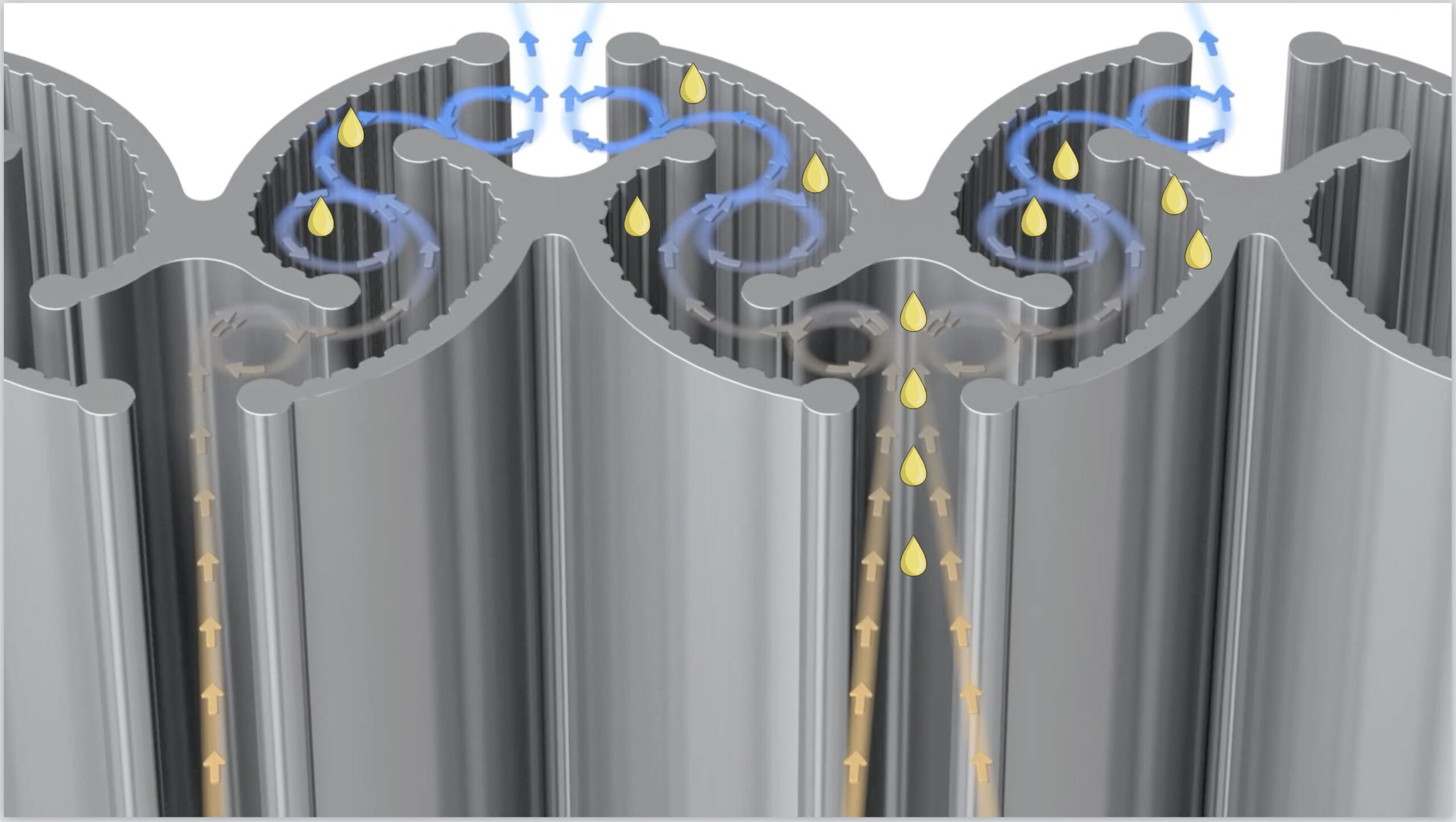
Smooth surfaces may look high-quality, but they are often the worse solution in terms of flow.
Or to put it another way:
It is not high gloss that determines separation performance, but physics.
CFD, test bench and measurement technology instead of gut feeling
Another key point of the webinar: Good separators are not created by chance.
They arise through development. These include
- CFD simulations
- Test bench measurements
- Particle measurements
- and consistent validation in practice
This is the only way to really understand how aerosols behave, where they accumulate, how they are carried away again and which geometry really works.
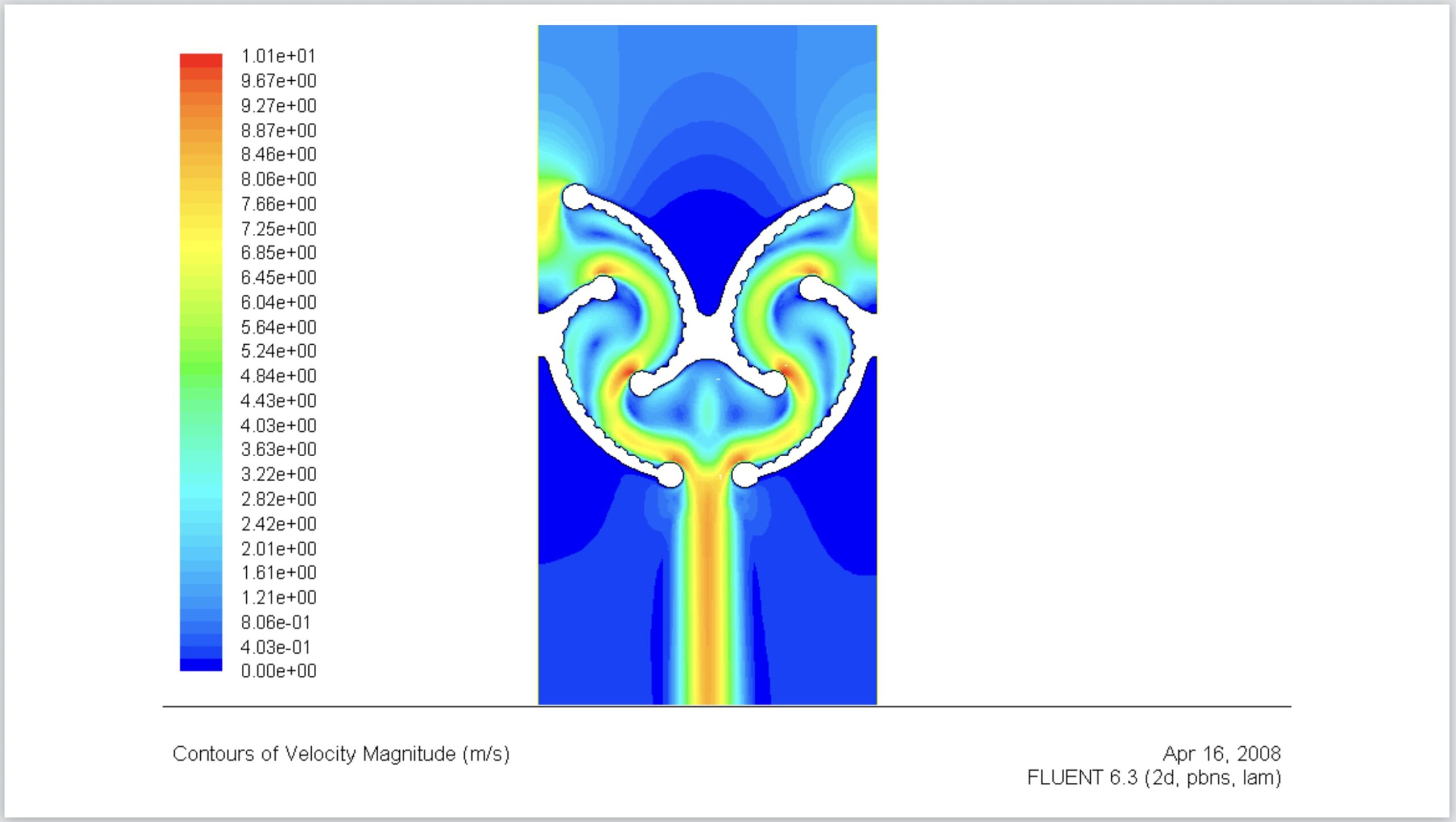
Those who do without it are not building optimized separator technology. At best, they build hope out of stainless steel.
The real question for the industry
When we talk about air pollution control in ventilation technology, we have to ask ourselves a simple question:
How much development has really gone into the separator we use?
Is it just a bent sheet of metal?
Or is it a fluidically developed component based on measurement technology, CFD and real particle physics?
This is precisely where the boundary between any solution and genuine air pollution control lies.
The webinar recording
In the full webinar we show, among other things:
- how separators have developed historically
- Why filters and combination separators can be problematic
- what role standards and fire tests play
- Why rough surfaces can work better than smooth ones
- and how modern flow-optimized separators are created
🎥 Click here for the YouTube recording:
Conclusion
A good aerosol separator is not just sheet metal.
It is the result of physics, development, measurement technology and experience.
And this is precisely why you should take a much closer look when talking about separators in ventilation technology.
Because there are more than just a few bending edges between the simple baffle plate and the flow-optimized separator.
But worlds.
Further information on efficient aerosol separators: