









Inhaltsverzeichnis
- Why is exhaust air planning so important?
- The first step: Understanding how the kitchen is used
- How to calculate the right air volume
- High air volumes: Not a luxury, but a necessity
- The simultaneity factor: curse or opportunity?
- Intelligent control: More efficiency through sensors
- Conclusion: Good planning saves trouble – and energy
- YouTube webinar video recording:
- Follow us on social media
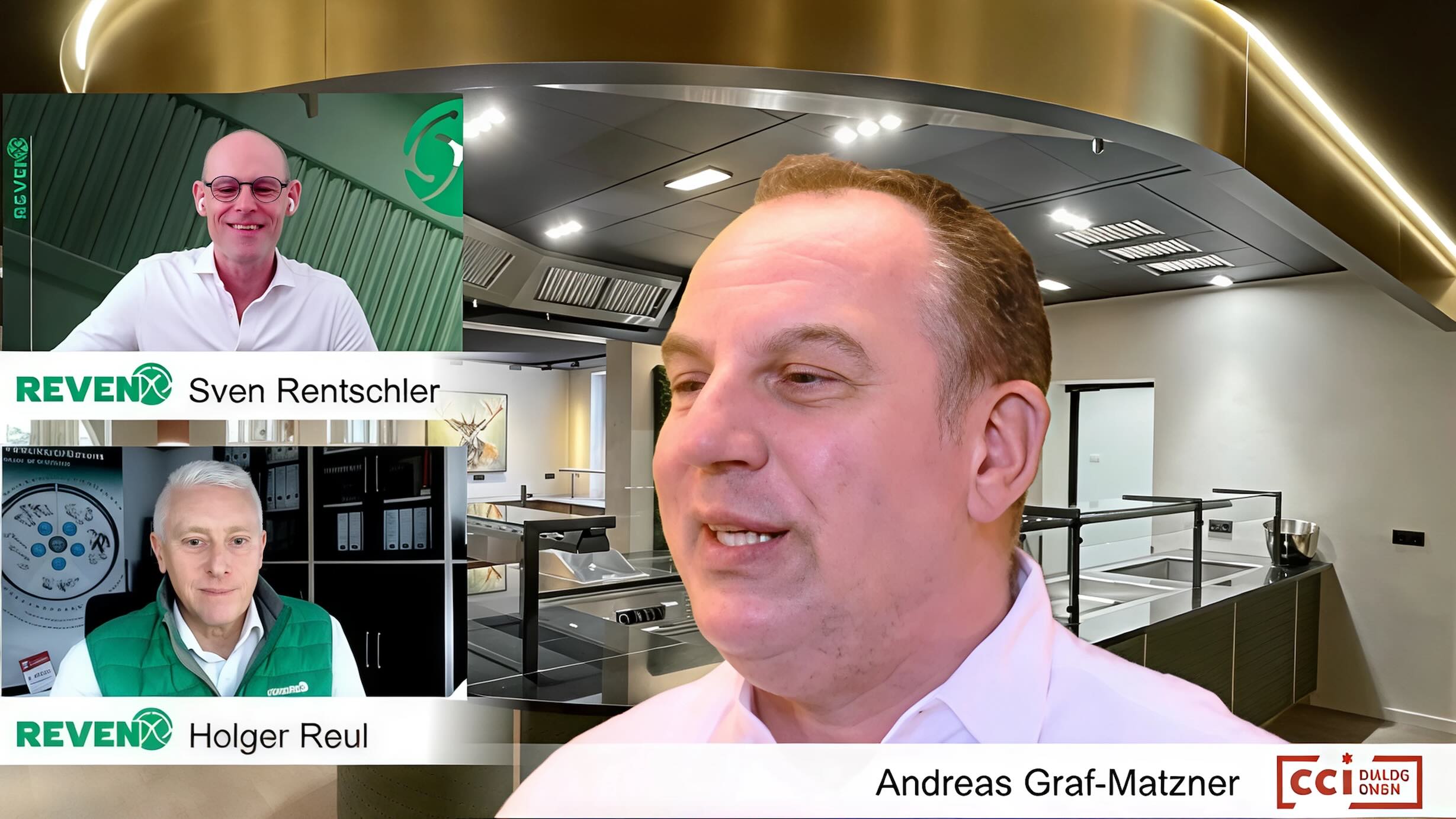
Exhaust air planning in the commercial kitchen: How to do it efficiently and in compliance with standards – a YouTube webinar recording with cci Dialog GmbH. Things often get hot in commercial kitchens – in the truest sense of the word. Anyone who has ever worked in a hotel or commercial kitchen knows that the room is crammed with cooking appliances, it steams, it roasts, it hisses – and a lot of heat and moisture is released in the process. To ensure that working conditions remain pleasant and safe, you need well thought-out exhaust air planning.
In a recent webinar organized by cci Dialog GmbH together with REVEN GmbH, it was explained exactly what is important – and why high air volumes are not a mistake, but a necessity.
Why is exhaust air planning so important?
Kitchens cannot be compared with offices or restaurants. This is where production really takes place: in a confined space with high energy output and a high volume of steam and heat. It is more comparable to an industrial production facility than a normal room.
This is why significantly more air exchange is required – sometimes 100 to 200 air changes per hour. This is the only way to reliably remove steam, heat and grease mist.
The first step: Understanding how the kitchen is used
Proper planning always starts with a so-called system sketch. This is a kind of floor plan of the kitchen in which everything is recorded:
– Where are which devices located?
– What type of detection (hood or blanket) is appropriate?
– Which zones are created by different uses?
This step ensures that everyone involved can get an accurate picture – even months later.
How to calculate the right air volume
Once the system sketch has been drawn up, the required exhaust air volume is calculated. This is based on the European standard DIN EN 16282, which takes many important factors into account:
– Device size and performance
– Distance to the hood or ceiling
– Heat input
– Room height and room size
With the Recomax tool, REVEN GmbH offers a free online program with which planners can easily carry out these calculations. The prerequisite is that the data is entered correctly – a small oversight, for example in the appliance size, can greatly distort the calculation.
REVEN offers a free online app for exhaust air calculation. You can find it directly on our website reven.de – simply click on the calculator icon on the right-hand side of the page. Or use the following link:
High air volumes: Not a luxury, but a necessity
A frequent point of criticism: Why are the calculated air volumes so high? The answer: Because modern appliances use a lot of energy and release a lot of steam, heat and fat into the air. If too little air is planned, problems quickly arise:
– Poor air quality for kitchen staff
– Grease and water vapor deposits
– Possible mold growth or damage in the exhaust air system
– Risk of disputes and legal disputes due to planning errors
The simultaneity factor: curse or opportunity?
One point that is often discussed is the so-called simultaneity factor. It describes how many devices are in operation at the same time. In theory, a factor of 0.7 (70%) is often sufficient – but not in practice. Especially at peak times – at lunchtime and in the evening – almost all appliances are running at the same time in many kitchens.
Saving here means saving at the wrong end. After all, the exhaust air system must also function during these peak times.
Intelligent control: More efficiency through sensors
Sensor-based controls are a smart way to flexibly control air volumes. Sensors detect temperature and humidity directly on the hoods or ceiling elements. The system therefore recognizes where cooking is taking place – and automatically adjusts the air volumes zone by zone.
This saves energy, ensures safety and reduces operating costs in the long term.
Conclusion: Good planning saves trouble – and energy
Exhaust air planning in commercial kitchens is complex – but feasible. Those who start early with a system sketch, provide the right data and adhere to the applicable standards are on the safe side.
And with modern control technology, you can even save energy – without compromising on hygiene and comfort.