







A granulate for reducing odors in kitchens. The RGN99 granulate from REVEN is used to effectively break down organic odors. It is therefore a food-safe alternative to activated carbon. Not only that, but it is also a much more sensible alternative for kitchens!
In kitchens, the combustion of animal and vegetable fats produces a large number of complex and aggressive organic gas compounds. These kitchen odors are transported in the air. The odor molecules are far too small to be removed with conventional kitchen separators. Other processes are required for this. The most common methods of odor removal are oxidation using UVC systems and filtration using activated carbon.
UVC systems and activated charcoal are not suitable for reducing odors in kitchens
Why is activated carbon unsuitable for use in kitchen exhaust air? Because activated carbon hardly works in kitchen exhaust air! The often very high humidity in kitchen exhaust air is a major problem for activated carbon. Filters made of activated charcoal in combination with oils and fats also very quickly lead to a much too high fire load in the exhaust air system!
Why are UVC systems unsuitable for reducing odors in kitchens? We have very detailed blog articles that explain this in great detail. Take a look at this article and tutorial:
A granulate as the sensible alternative for reducing odors in kitchens
Odor reduction in kitchens is achieved by oxidizing the odor molecules in the exhaust air. The material used is potassium permanganate on a zeolite volcanic rock. This high-performance granulate is the most popular method of removing odors in the USA. Potassium permanganate is also a substance that is frequently used for water treatment and disinfection.
The granulate used in our kitchen hoods and channel separators has the following structure: It consists of a highly porous rock, which acts as a molecular sieve, and potassium permanganate, which is used for oxidation. The rock is the carrier material. This is comparable to cat litter. It is a fine-grained substance. The carrier material therefore already binds substances from the exhaust air.

This granulate is much less sensitive to fats and oils. It therefore has a much lower fire load. The granulate has no problems whatsoever with high humidity.
Ventilation products with the granulate to reduce odors in kitchens
We use the granules described above in the following products for ventilation technology and plant engineering:
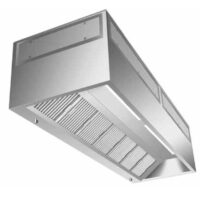
👉 Recirculation hoods – all the information you need in our eBook
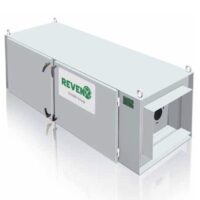
👉 Exhaust air duct cleaner – all the information you need in our eBook
Test report on high-performance granules for reducing odors in kitchens
You can also download a test report on functionality and efficiency here:
