






Inhaltsverzeichnis
- What a golf ball has to do with an aerosol separator
- The underestimated problem: re-entrainment
- Why high flow velocities are critical
- Why smooth surfaces become a problem
- The solution: texture instead of high gloss
- Measurable result: +20% efficiency
- Why the surface is so important
- What happens in detail
- Why classic CFD is not enough
- Aerosols do not follow the air
- The decisive difference: particle tracks
- Where separation really takes place
- The decisive improvement
- Conclusion: Efficiency comes from the details
- Follow us on social media
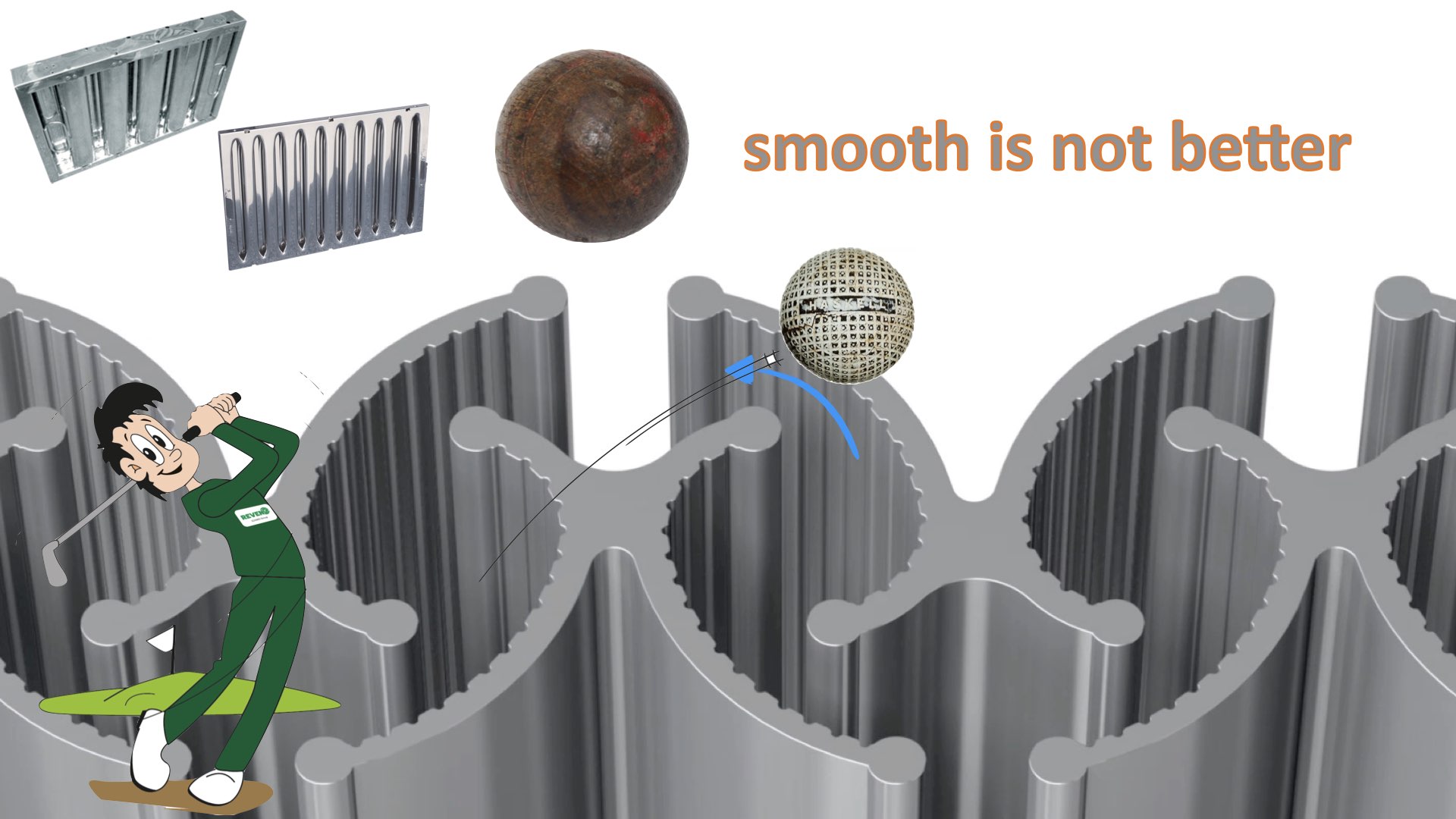
Aerosol separators increase efficiency: Why a scratched golf ball flies better! Golf balls used to be smooth. They were made of leather. They were highly polished. And they looked perfect.
But that was precisely the problem.
Because these smooth golf balls flew badly. They were unstable. And they did not reach great distances. Only when the balls were used did this change. They became scratched. They became rougher. And suddenly they flew better.
👉 It is precisely this knowledge that is helping to increase the efficiency of aerosol separators today.
What a golf ball has to do with an aerosol separator
A clear rule often applies in ventilation technology:
👉 Smooth is good.
That is why many aerosol separators are:
- highly polished
- Made of stainless steel
- as streamlined as possible
But this assumption falls short. If you want to increase the efficiency of aerosol separators, you have to ask a different question:
👉 What happens to the aerosols after separation?
The underestimated problem: re-entrainment
Many systems do not fail because of the separation itself. But because of what happens afterwards.
You often see this in practice:
- Aerosols are separated
- they accumulate on the surface
- and are then carried away again
👉 This re-tearing is called re-entrainment
And this is where a large part of the efficiency is lost.
Why high flow velocities are critical
A look at the current shows why this is the case:
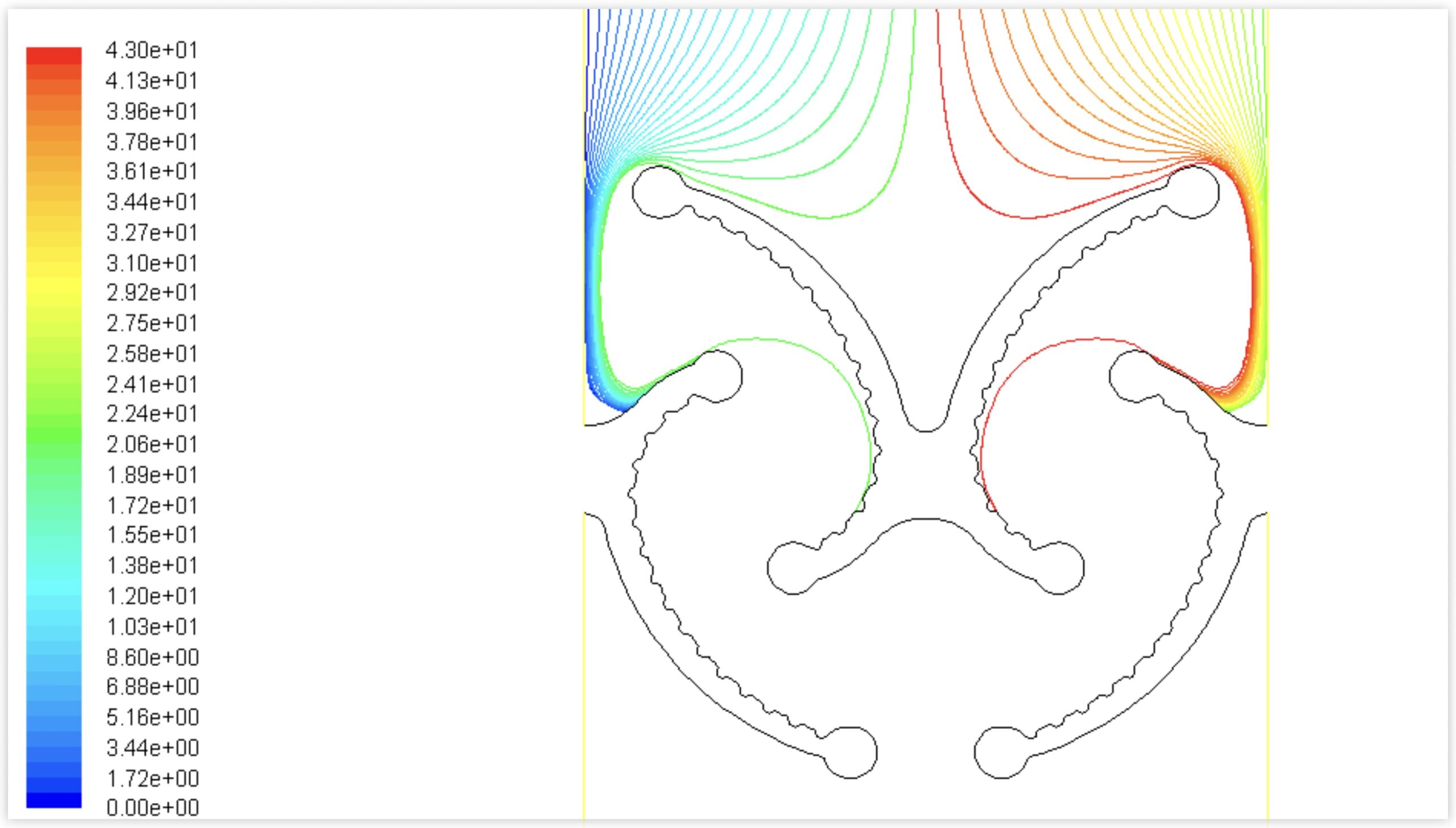
Here you can see:
👉 Local flow peaks of up to 10 m/s
And it is precisely these areas that are critical.
Because there:
- high shear forces act
- drops become unstable
- separated aerosols are carried away again
So if you want to increase aerosol separator efficiency, you need to master precisely these zones.
Why smooth surfaces become a problem
Classic separators rely on smooth surfaces.
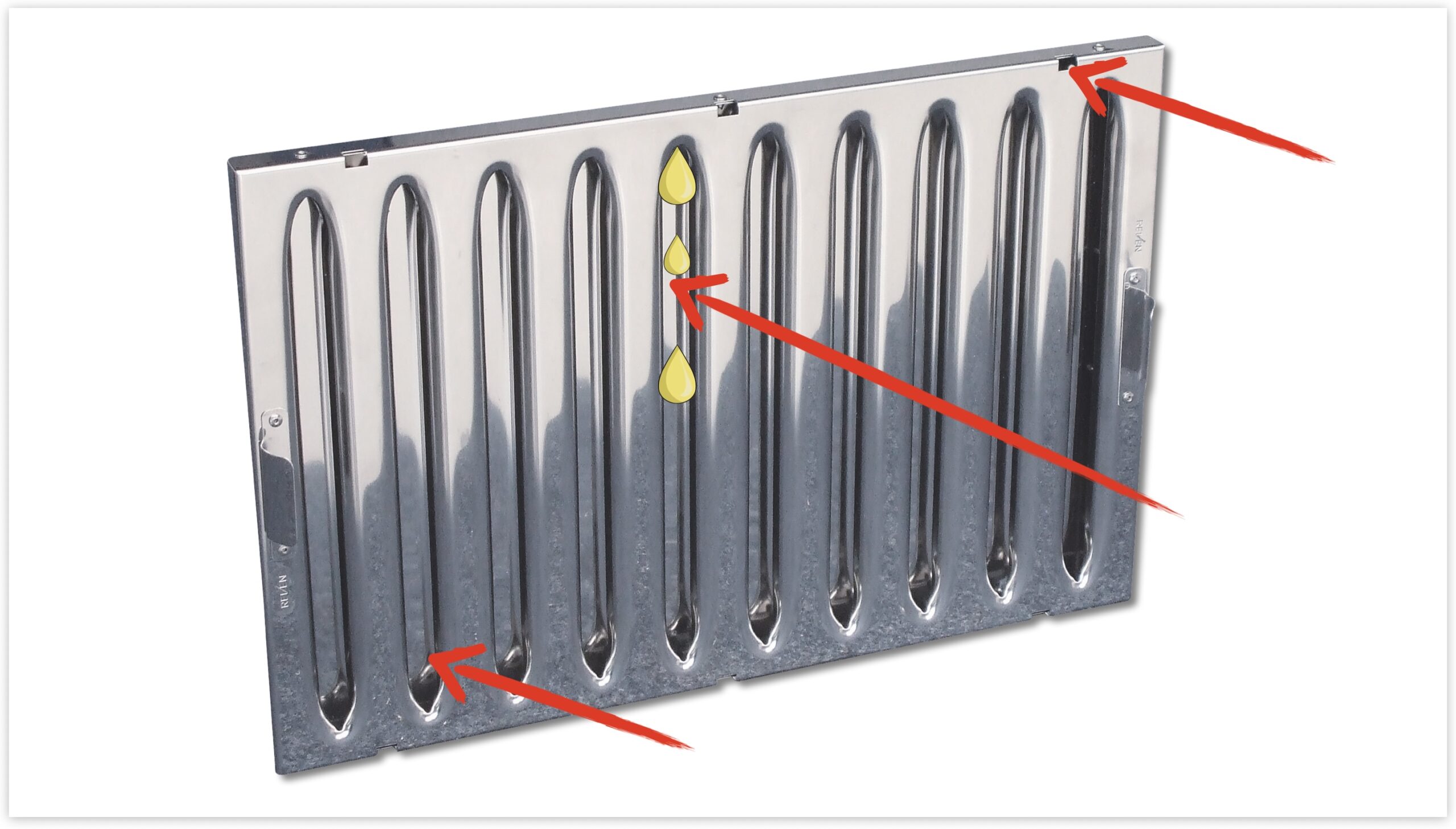
Such barely optimized separators with highly polished surfaces have serious disadvantages:
- Droplets lie freely on the surface
- they have little support
- the airflow attacks directly
👉 Result:
Separated aerosols are re-introduced into the air stream.
The solution: texture instead of high gloss
This is where the golf ball idea comes into play. The question was:
👉 Can a structured surface increase aerosol separator efficiency?
The answer is clear:
👉 Yes.
Measurable result: +20% efficiency
CFD analyses and real measurements show:
👉 The separation efficiency increases by around 20%
And that without:
- significantly higher pressure loss
- Larger design
- Additional energy
That is an enormous lever.
Why the surface is so important
The structured surface changes the behavior of the aerosols:
- Drops adhere better
- Liquid films become stable
- Microstructures protect against the air flow
- less re-entrainment
👉 This is precisely the key to increasing aerosol separator efficiency!
What happens in detail
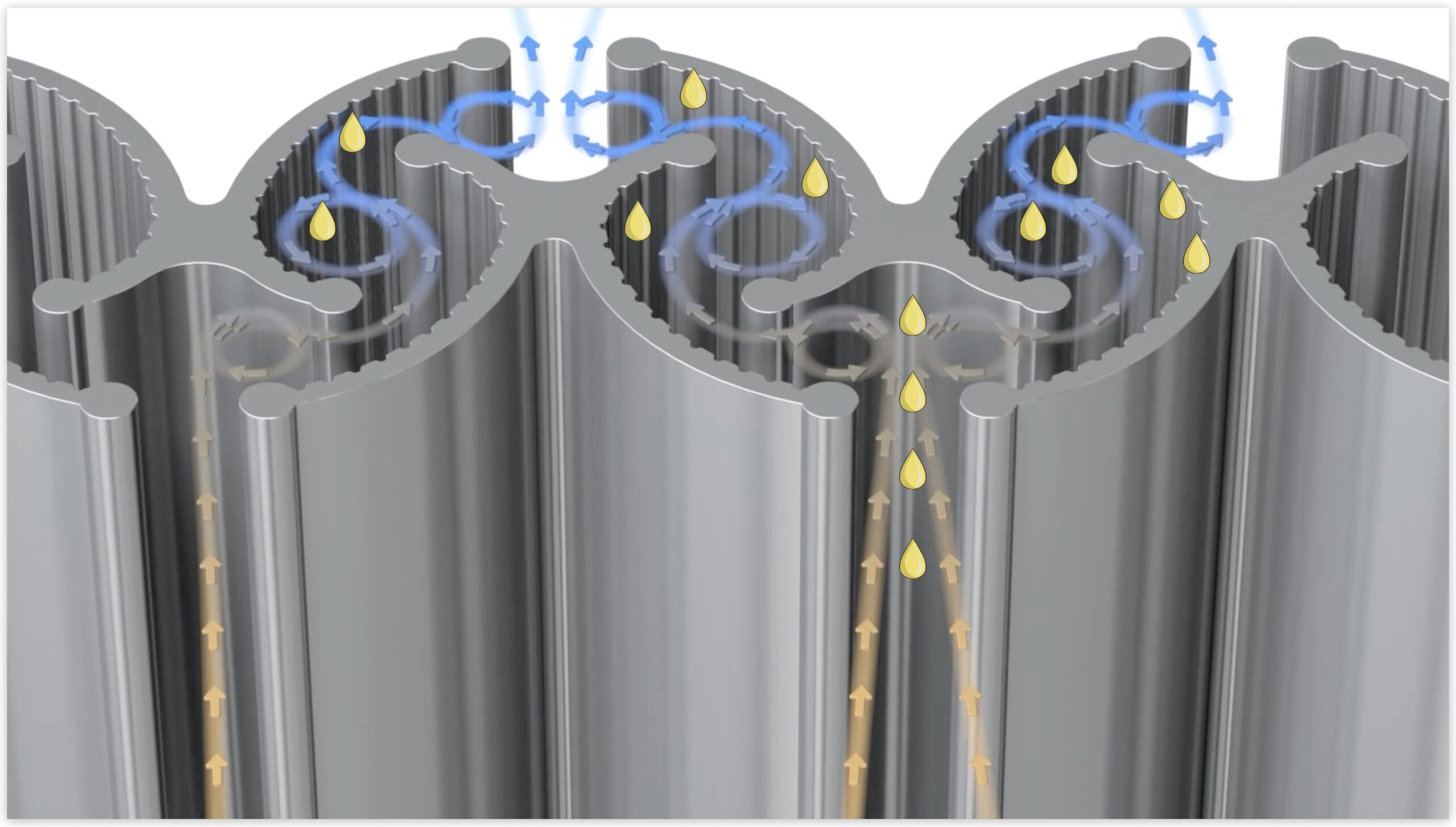
The structure generates:
- small vortices
- low-flow zones
- Protected areas
👉 The airflow flows over it
👉 The droplets remain stable underneath
Why classic CFD is not enough
Many CFD analyses only look at the air.
For example:
- in parking garages
- in offices
- in stairwells
But that is not enough. Because if you want to increase aerosol separator efficiency, you need to look at more.
Aerosols do not follow the air
have aerosols:
- Mass
- Inertia
- own trajectories
👉 They behave differently to air.
The decisive difference: particle tracks
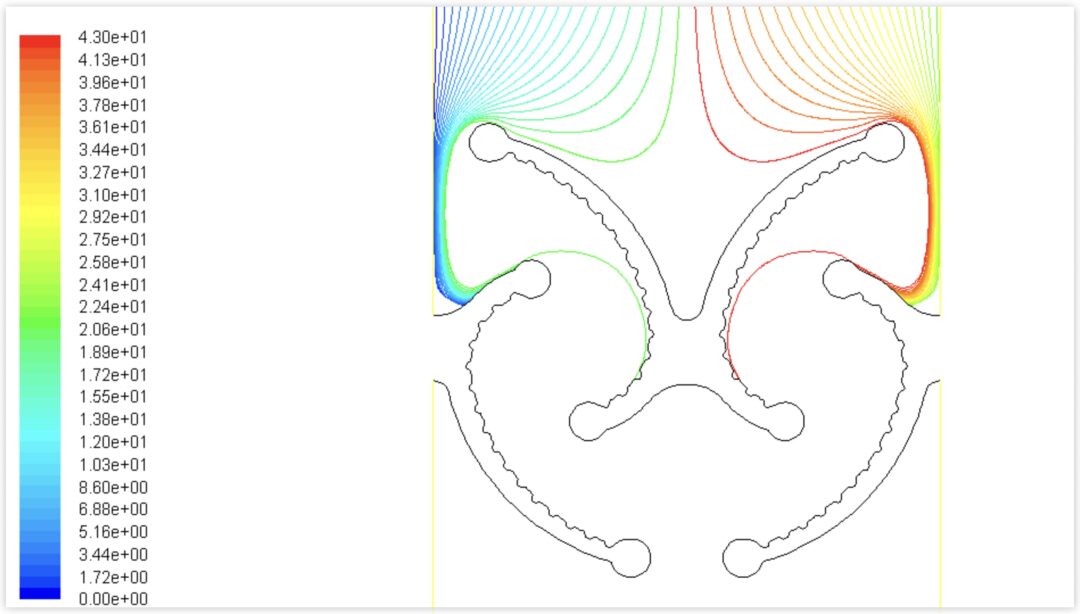
This analysis shows:
Aerosols move independently of the air flow
And even more important:
👉 Separation only occurs at certain points.
Where separation really takes place
The CFD shows clearly:
👉 The strongest separation takes place at deflectors.
So right there:
- where the current changes
- where inertia works
And at the same time:
👉 This is exactly where the highest flow velocities occur!
⚠️ The core problem in one sentence: Wherever the most is separated, there is also the greatest risk that everything will be lost again.
The decisive improvement
The textured surface works precisely in these critical areas:
- it stabilizes the drops
- it reduces shear forces
- it enables safe running
👉 This sustainably increases the efficiency of the aerosol separator.
Conclusion: Efficiency comes from the details
Many try to improve the performance of separators by:
- Higher air speed
- more energy
- Larger systems
to improve. But the greatest impact often comes from elsewhere:
👉 on the surface.
Conclusion: If you want to increase aerosol separator efficiency, you should not only look at the flow – but above all at the behavior of the aerosols on the surface.
Further information on efficient aerosol separators: