







Inhaltsverzeichnis
- Extraction of impregnating resin from electric motors in the impregnation process
- Why impregnating resin vapors have special requirements
- Important findings from practice
- Suction of impregnating resin Electric motors directly at the impregnation system
- Technical solution for the extraction of impregnating resin from electric motors
- Series solution in modern impregnation systems
- Conclusion
- Follow us on social media
The extraction of impregnating resin electric motors is becoming increasingly important in the production of modern electric motors. Hot resin vapors are produced when impregnating the motor windings. These vapors are aggressive and condense very quickly. Plant operators must therefore capture these vapors at an early stage and treat them safely.
Without suitable extraction, resin components can be deposited in equipment, pipes and ventilation systems. This causes technical problems and additional maintenance work.
Reliable extraction of impregnating resin from electric motors is therefore an important component of modern impregnation systems.
Extraction of impregnating resin from electric motors in the impregnation process
During the manufacture of electric motors, the windings of the stator are treated with a special impregnating resin. Electric motors convert electrical energy into mechanical motion and essentially consist of a stationary stator and a rotor.
During the manufacture of electric motors, the windings of the stator are treated with a special impregnating resin. Electric motors convert electrical energy into mechanical motion and essentially consist of a stationary stator and a rotating rotor.
A good introduction to the structure and function of an electric motor can be found in the following Wikipedia article, for example:
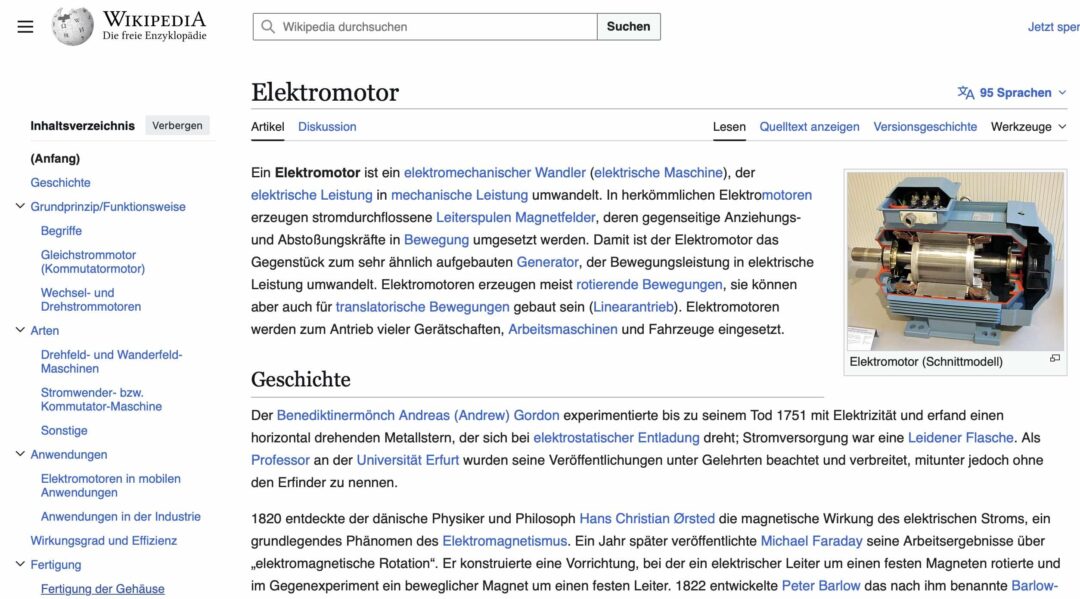
During production, manufacturers then immerse the components in a liquid resin bath. The resin penetrates deep into the windings and stabilizes the entire construction.
This resin fulfills several important tasks:
- it insulates the electrical windings
- It mechanically stabilizes the components
- it improves the service life of the electric motor
To allow the resin to penetrate deep into the windings, many systems heat the resin. However, resin vapors and aerosols are produced during immersion and subsequent curing.
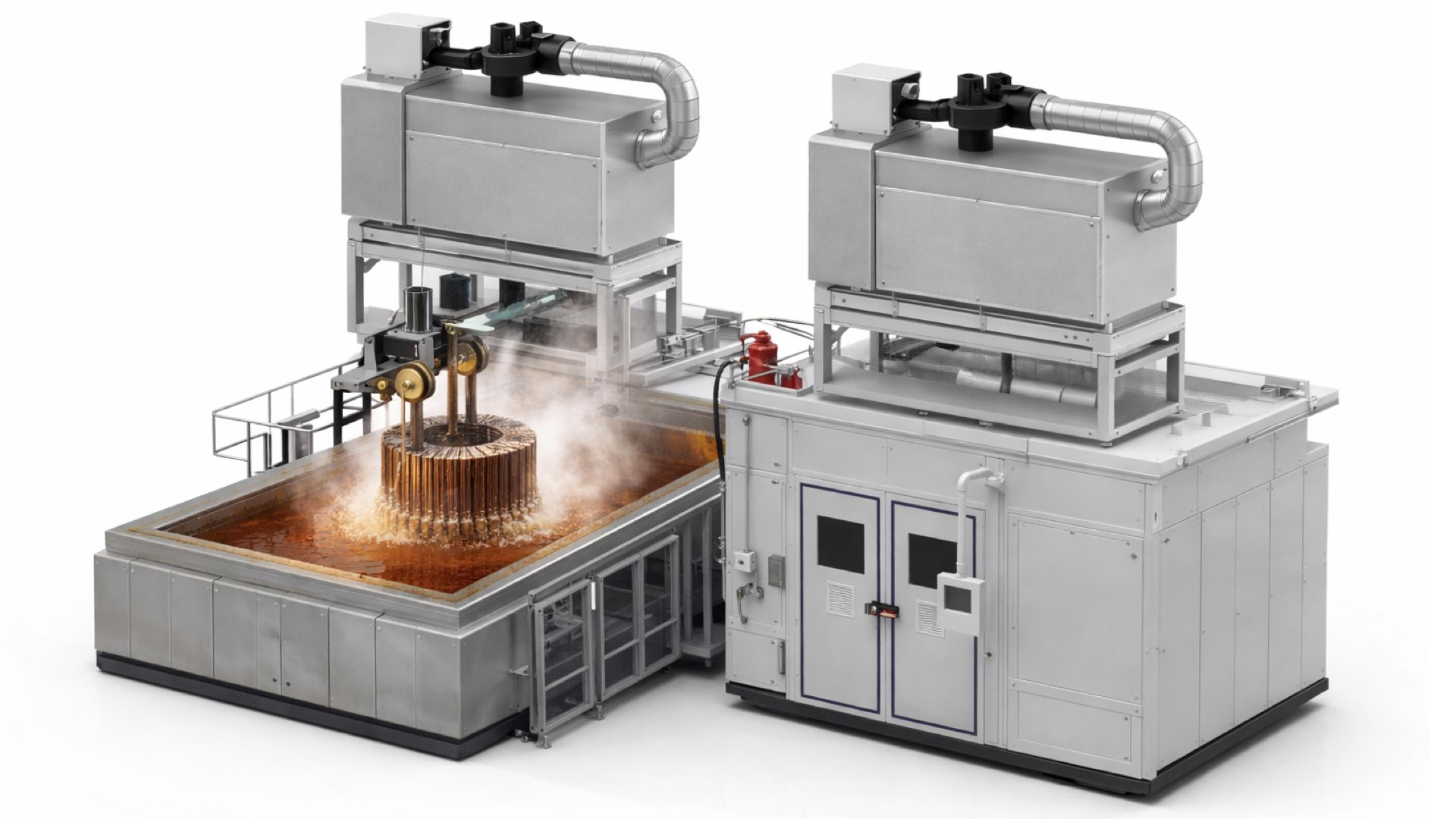
The following brief insight provides an example of how the impregnation process for electric motors works in practice. It shows how resin is applied to the windings and why resin vapors are created in the process.
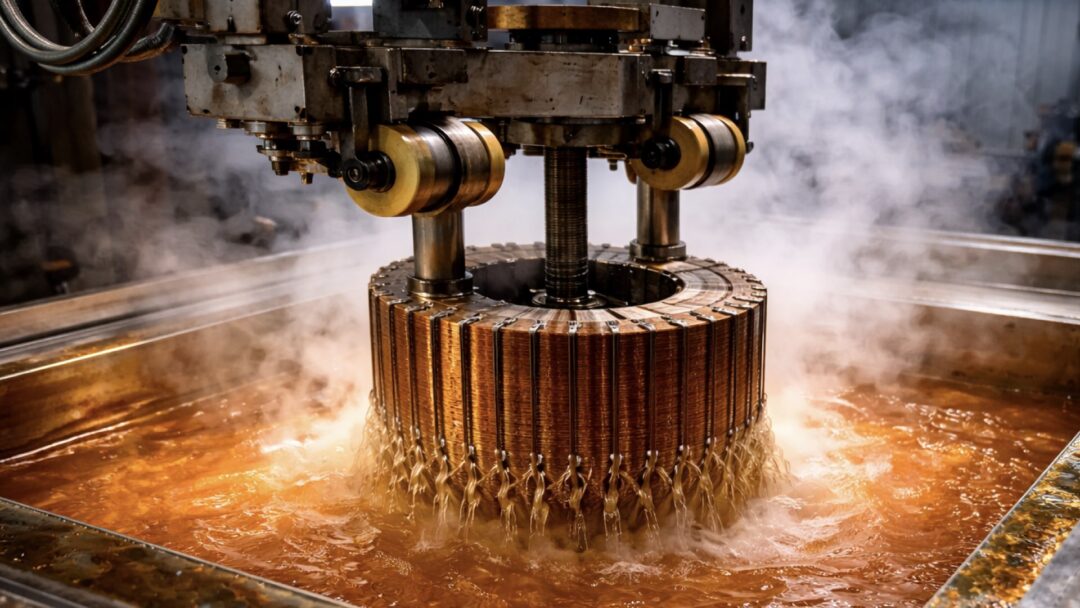
This is precisely where reliable extraction of impregnating resin electric motors becomes necessary.
Why impregnating resin vapors have special requirements
In practice, impregnating resin vapors exhibit several properties at the same time. This places special demands on the ventilation technology.
Typical properties are
- High temperature
- aggressive chemical components
- Highly condensing vapors
If plant operators do not control these vapors, various problems can arise.
For example:
- Resin deposits in pipes
- Health hazard for production personnel
- bonded ventilation systems
- Damaged seals
- soiled system areas
Therefore, simple hall ventilation is not sufficient in many cases. Instead, the system requires targeted extraction of impregnating resin from electric motors directly at the process.
Important findings from practice
Various projects have revealed an important technical experience. Many classic sealing materials react sensitively to impregnating resin vapors.
The aggressive components of the resin attack many seals. As a result, these materials lose their function over time.
For this reason, modern air purification systems often use completely tightly welded stainless steel housings. This design works without conventional housing seals and is therefore significantly more robust.
Such solutions are particularly suitable for the extraction of impregnating resin electric motors.
Suction of impregnating resin Electric motors directly at the impregnation system
Modern impregnation systems usually have a targeted extraction system in the upper area of the system. This is where the hot resin vapors from the process rise upwards.
An extraction system captures these vapors directly at the source. The system then transports the polluted air to an air purification system.
This prevents the system from spreading resin vapors in the production room.
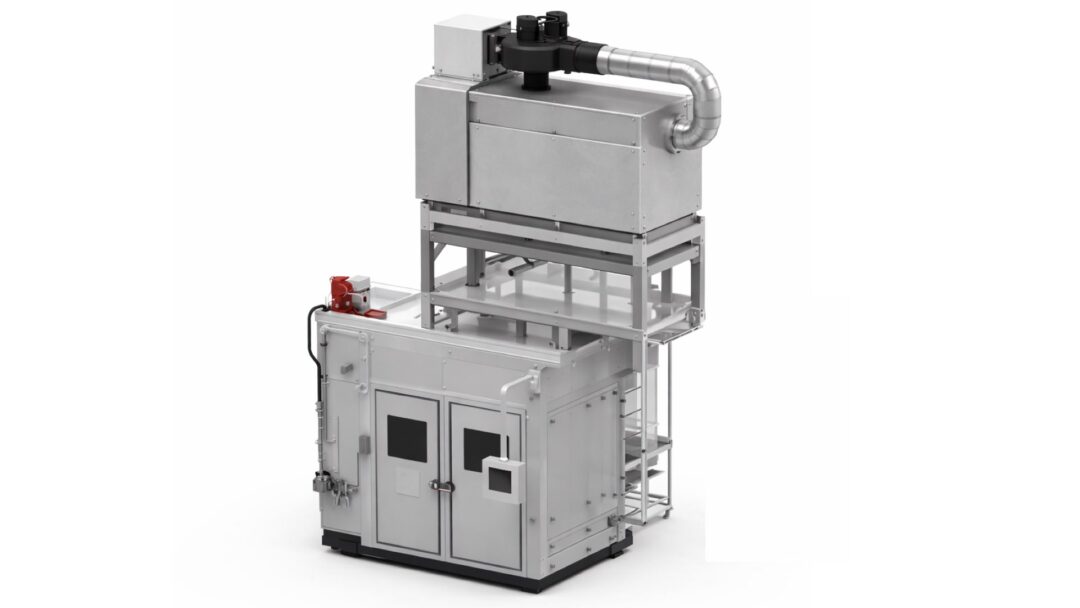
Extracting impregnating resin from electric motors protects both the system and the production environment.
Technical solution for the extraction of impregnating resin from electric motors
A reliable solution combines several technical steps. Each step takes on an important task.
👉 High air volumes
The extraction system must capture sufficient air. Only then can the system safely absorb the resin vapors.
👉 Condensation of the resin vapors
As the vapors condense strongly, a condensation device first cools the air. This causes large parts of the resin to separate out.
👉 Air purification
Special air purifiers then clean the remaining aerosols. These devices have robust housings and high separation efficiency.
Many systems therefore use tightly welded stainless steel housings that work reliably even with aggressive media.
Series solution in modern impregnation systems
Today, such air purification systems are standard equipment in many modern electric motor production plants.
The air purifiers are usually located directly on the system. There they treat the resulting resin vapors immediately after extraction.
Especially in the production of electric motors for electromobility, the extraction of impregnated resin electric motors is becoming increasingly important.
Conclusion
The manufacture of modern electric motors places high demands on air technology. Especially when impregnating with impregnating resin, aggressive and condensing vapors are produced.
Reliable extraction of impregnating resin from electric motors combines several elements:
- Targeted extraction directly at the system
- Sufficiently high air volumes
- Condensation of the resin vapors
- Robust air purifiers for aggressive media
With the right air technology, these production processes can be operated safely, cleanly and sustainably.