









Inhaltsverzeichnis
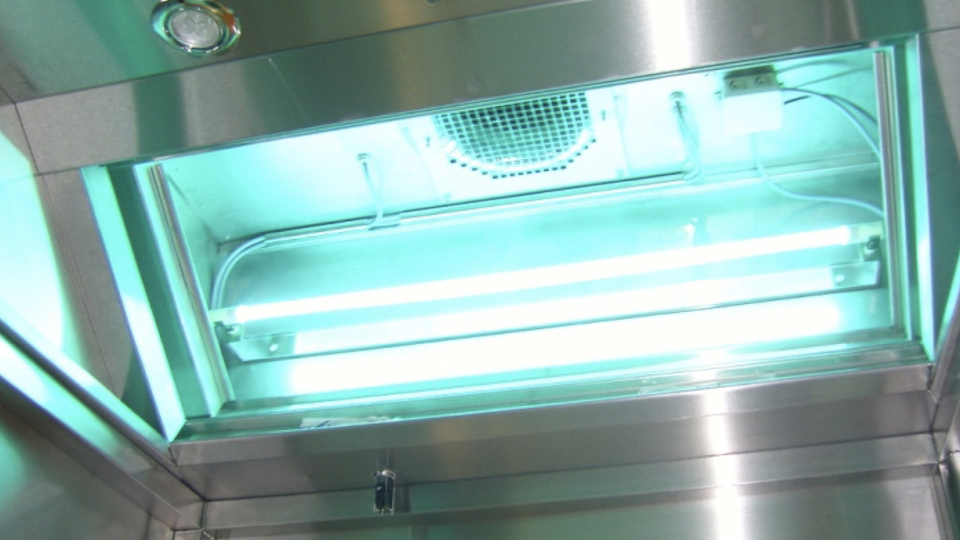
When UV tubes are used in commercial kitchen exhaust air, UV radiation is used to generate ozone, which can be used to oxidize and reduce odour carriers in the exhaust air. The same approach is taken when using so-called ozone generators. Regardless of the system used, however, it should be noted that there are ozone limit values to be complied with!
Ozone limit values for indoor areas
In many European countries, the limit value for indoor ozone is still set at a maximum of 2 mg ozone per cubic meter of indoor air, i.e. an ozone limit value of 2 mg/m3. This was also the previous ozone limit value in Germany, but it has been abolished; in Switzerland, for example, this limit value still exists. Information on this can be found at:
https://de.wikipedia.org/wiki/Ozon in the upper area on the far right-hand side, where the safety instructions are noted in the color-coded box.
According to the classification criteria for carcinogenic substances of the German Research Foundation (DFG), ozone is classified as a substance that has not yet been sufficiently investigated, but is suspected of causing cancer in humans!
Ozone limit values for outdoor areas
For the ozone limit value in outdoor areas, limit values of 20 mg/m3 for kitchen exhaust air are still mentioned even in comments by kitchen ventilation experts. For example, on the cci page in the comments https://cci-dialog.de/ozon_in_der_abluft.html the following can be read:
“Complaints due to excessive ozone concentrations in the exhaust air can occur, even if the ozone concentrations released are far below the permissible limit value of 20 mg/m³.”
This information also has its origins in the European standard DIN 16282, a work to which many national industry associations have also contributed. This standard states that the concentration of ozone in the exhaust air of a commercial kitchen must not exceed 10 ppm. At an air pressure of 1013 hectopascals and a temperature of 20 degrees Celsius, the 10 ppm of ozone specified there corresponds almost exactly to a limit value of 20,000 micrograms of ozone per cubic meter of air.
However, the following is noted on the website of the German Federal Environment Agency:
“In order to rule out health risks to the population in the event of short-term exposure to elevated ozone concentrations, the 39th BImSchV sets information and alert thresholds. The information threshold of 180 micrograms per cubic meter (µg/m³), averaged over one hour, serves to protect the health of particularly sensitive population groups. The alert threshold of 240 µg/m³, averaged over one hour, indicates the threshold above which there is a risk to the health of the population as a whole.
The following additional information can be found on the website of the German Medical Journal:
“An EU directive stipulates 180 µg/m3 (1 h value) as the information threshold and 240 µg/m3 as the warning threshold for the population. Changes in lung function parameters already occur at values between 160 µg/m3 and 240 µg/m3.”
Please note that the units of the limit and threshold values listed last are units in micrograms per cubic meter (µg/m3)! This means that the value of 20 mg/m3 quoted above by the kitchen ventilation expert would be a value of 20,000 µg/m3 in this unit of measurement!!!!
This comparison also explains why an ozone limit value for indoor areas of 2mg/m3 = 2,000µg/m3 is an ozone limit value that even halfway serious ventilation experts should not be aiming for under any circumstances! The same applies in exactly the same form for outdoor areas and then consequently also for exhaust air from commercial kitchens.
You can find a summary of this, for example, at https://www.allum.de/stoffe-und-ausloeser/ozon/grenzwerte-richtwerte
This fact regarding the ozone limit values must simply be observed without any ifs and buts when using UV systems and ozone generators to reduce odor nuisance, and there must be metrological proof that these thresholds are not exceeded.
Further information on this can also be found on our YouTube video tutorial: