









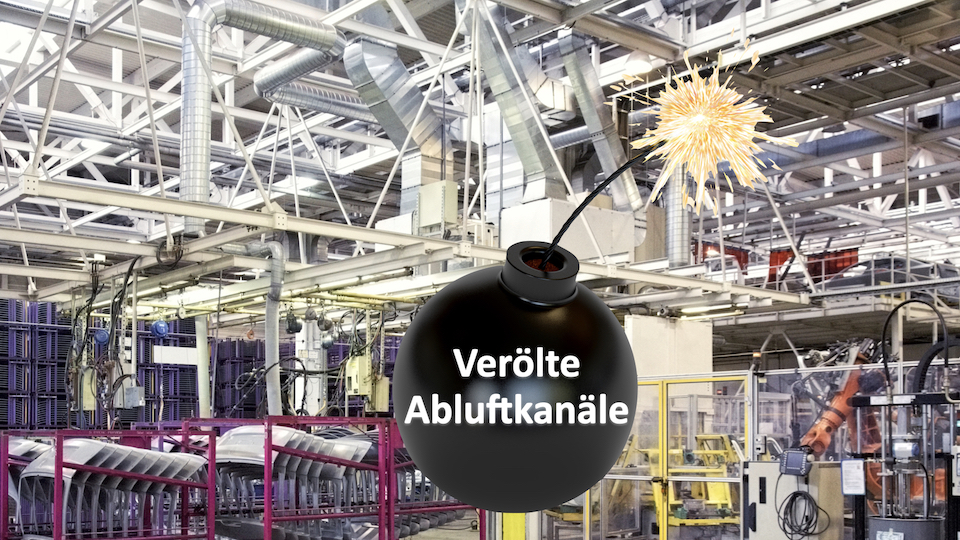
Ventilation ducts in production plants are becoming a ticking time bomb.
Oily exhaust air ducts occur during metal cutting. During this process, temperatures of up to 1,000 degrees and above are generated at the tool cutting edges. This causes the cooling lubricant to evaporate and releases oil mist, vapors and gases. These emissions must be extracted, otherwise the production hall and equipment will become oily and employees will inhale the hazardous aerosols, gases and vapors.
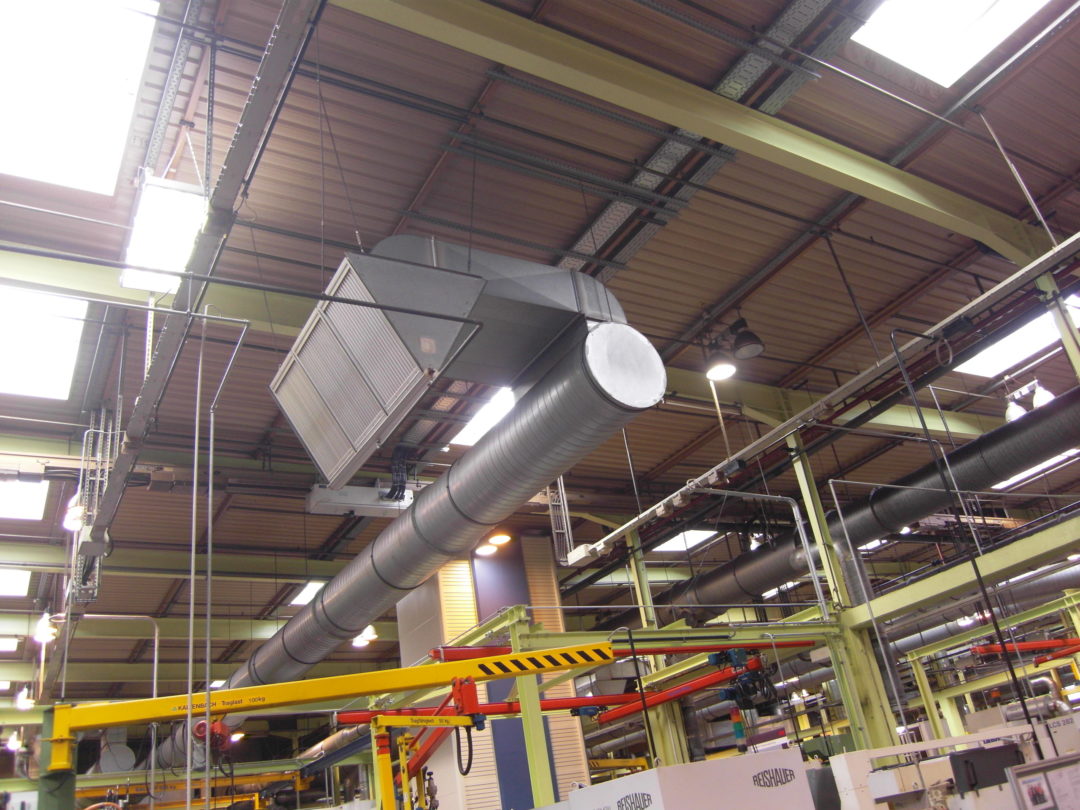
In larger companies in the metal industry, the machine tools are often connected to a ventilation system with a central oil mist separator. This sometimes means very long air duct paths between the production plant and the oil mist separator. The result of this is regularly heavily oiled exhaust air ducts!
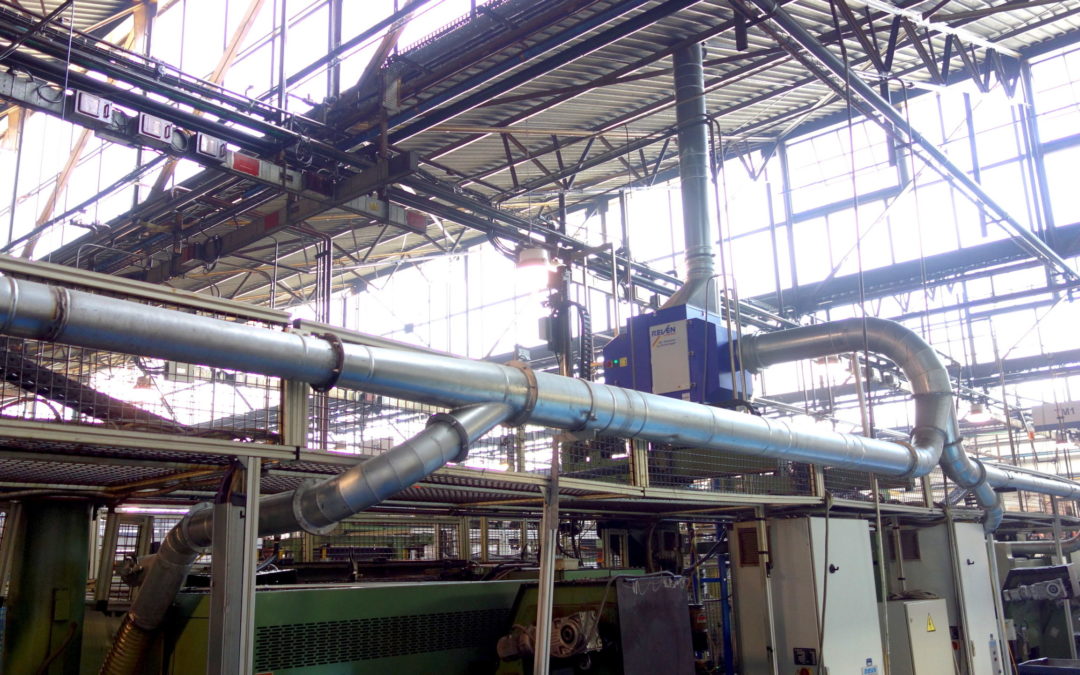
Due to the drop in temperature in the collection duct, the extracted aerosols can condense and build up a layer of grease in the duct. The coarse particles in particular often do not manage to reach the oil mist separator.
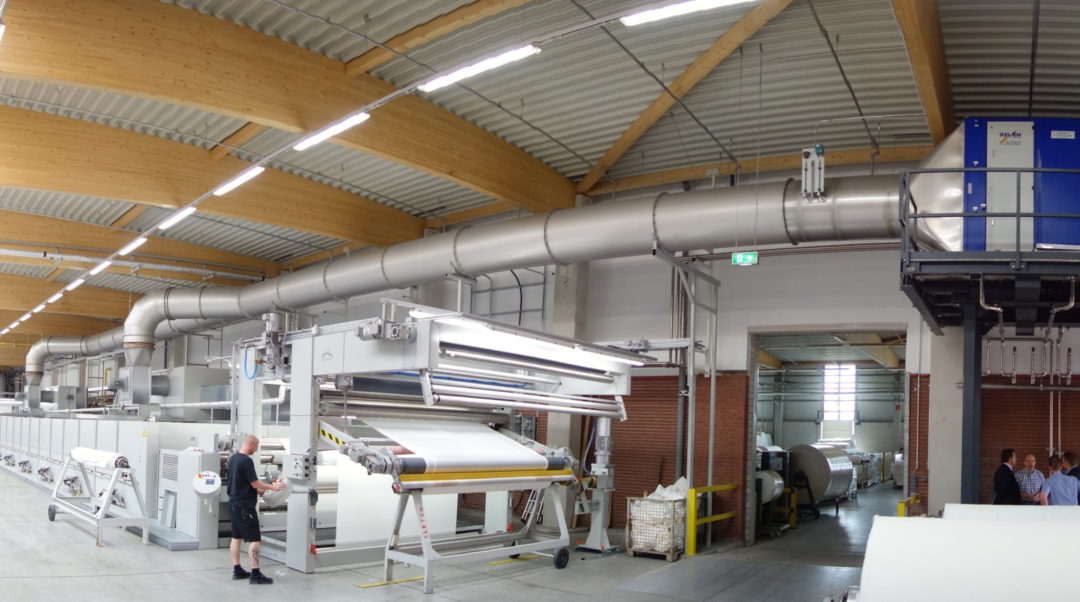
Oily exhaust air ducts place a static load on the air duct and – worse – they form a serious fire load. When using pure grinding and cutting oil as a cooling lubricant, the risk of fire is particularly critical, as an oily air duct acts like a fuse in the event of a grease fire. Although fresh greases and oils only ignite at temperatures of around 300 Gad C, this ignition temperature can also be significantly reduced in the case of resinified deposits.
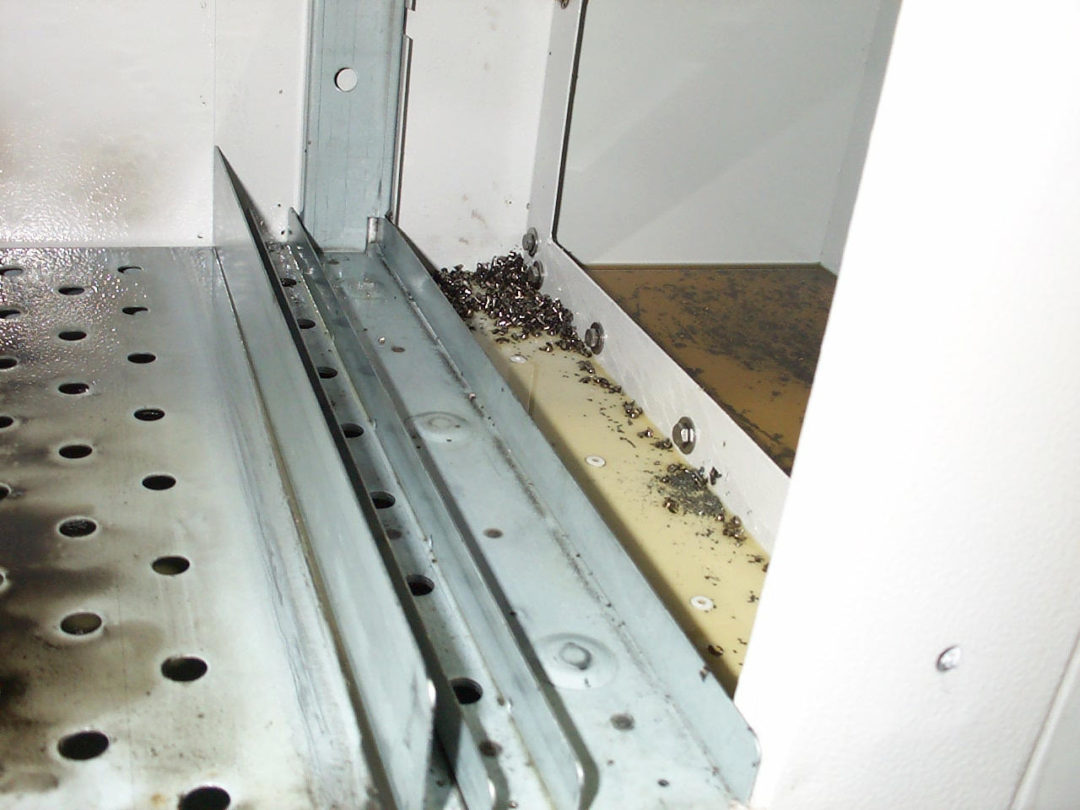
Such deposits and oil and grease residues in the exhaust air duct also impair the safe functioning of fire dampers, increase maintenance costs immensely and reduce the efficiency of heat recovery units. These problems can only be solved with a pre-separator directly at the capture point of each production process. The compact separators are equipped with a mechanically acting X-Cyclone separator, which uses the centrifugal effect to eject the aerosols and practically cleans itself.
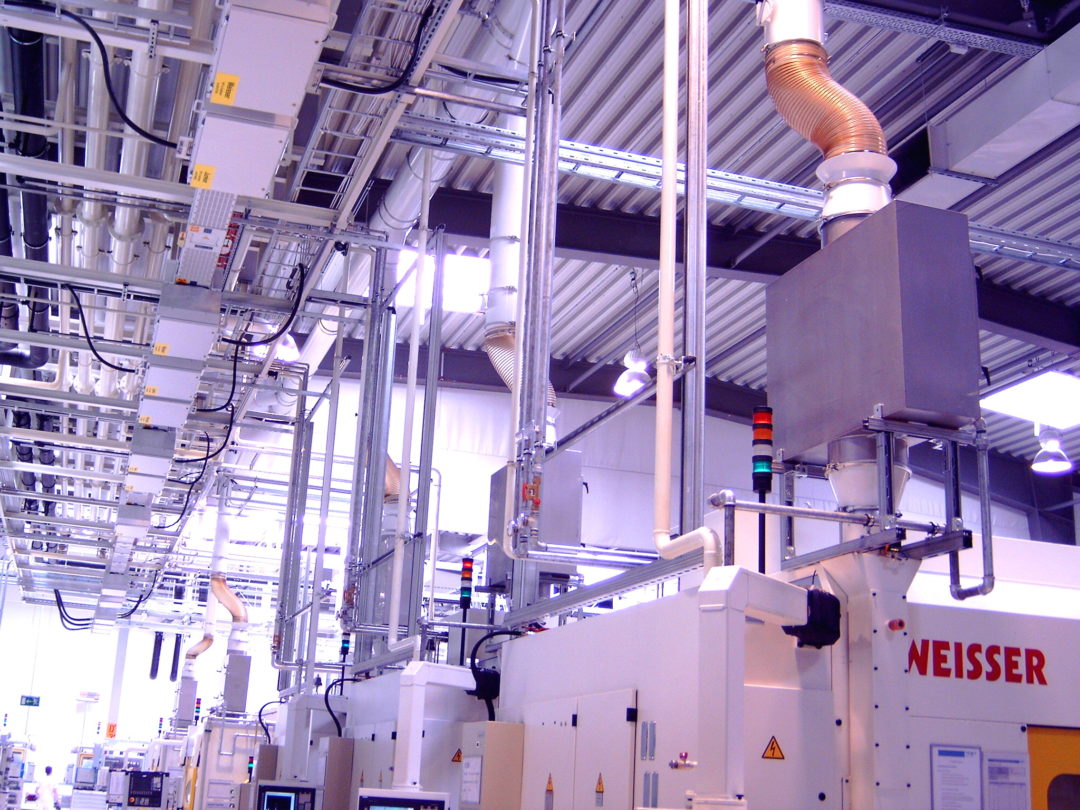
Pre-separation keeps the exhaust air duct and the central separator largely free of oil and grease. Without pre-separation, up to 1000(!) liters of condensate can accumulate in long collecting ducts. If maintenance is neglected, there is therefore a risk that the oily exhaust air duct will sag or collapse due to the increase in weight. Leaking air ducts and condensate dripping from the ceiling is a problem that is rarely discussed, but occurs time and again, especially in older factory buildings.
Even water-soluble cooling lubricants with 95% water and 5% emulsion additive cause undesirable grease deposits, as the water evaporates over time and leaves behind a flammable oil film. The ceiling turns black, the floor becomes slippery and the windows go blind. All this can be prevented with pre-separation.
However, such pre-separation on every machine only makes sense if the separators are also flame-arresting. This property is verified by a corresponding test mark. The test mark guarantees that the fire will not spread into the air duct in the event of a cutting oil fire or deflagration. Simple baffle plates or knitted filters do not meet this requirement.
For critical applications, such as the use of low-viscosity cutting oil as a cooling lubricant, Reven offers a multi-stage channel separator. It is equipped with extractable elements: an agglomerator enriches the micro-fine aerosols to form larger droplets, while a downstream X-cyclone separator removes the entire aerosolate.
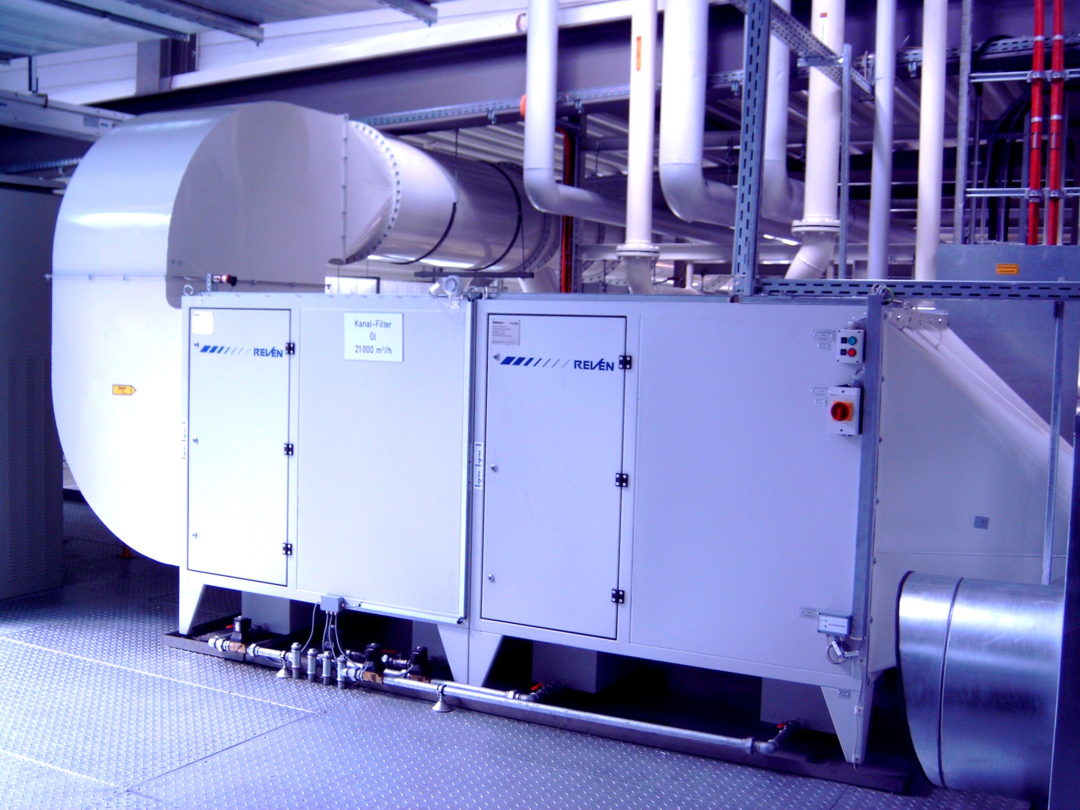
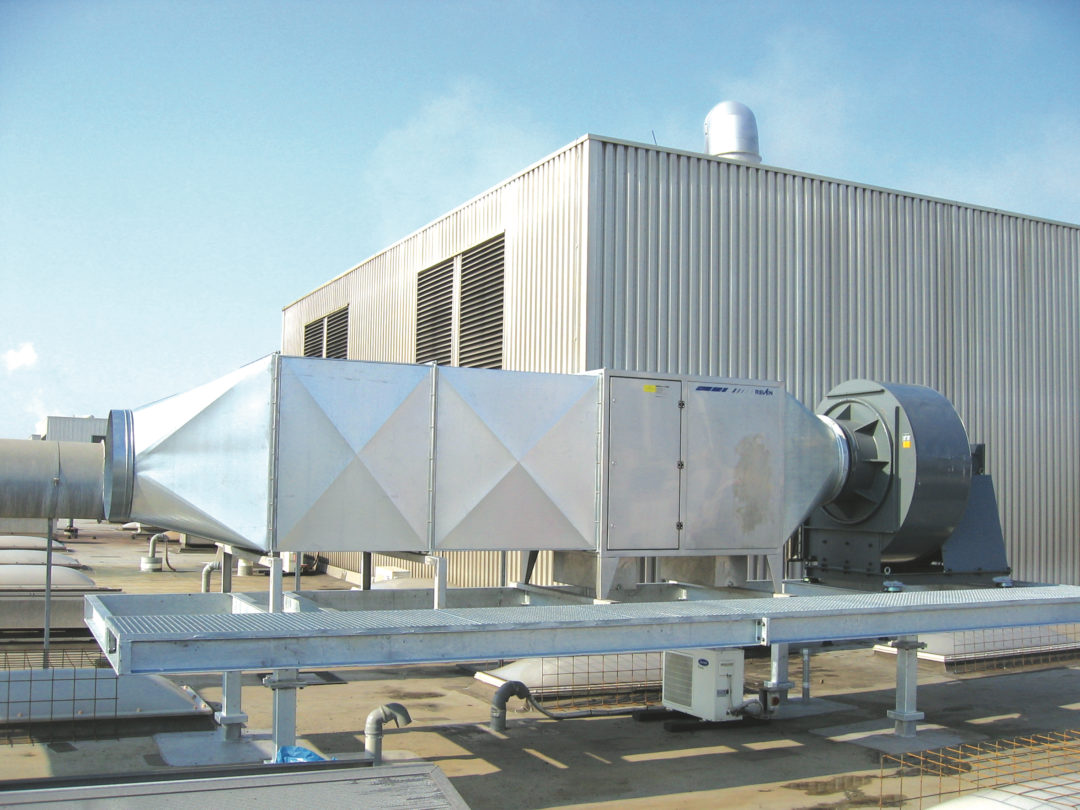
Reven’s duct separators are made of stainless steel and are available as standard for air volumes of up to 1,000 to 80,000 m³/h.
Further product information can be found here: https://bim2.reven.de/#/home/en